From the president
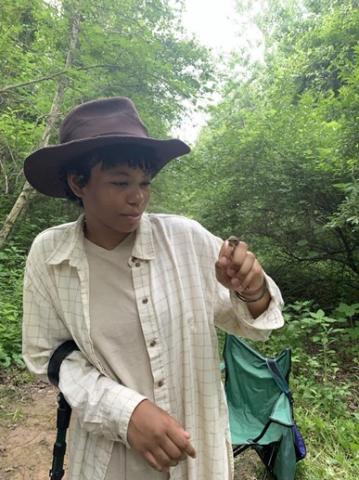
AJ Jones, Black Afro-Caribbean student at Holyoke Community College, is an emerging student leader active in addressing issues of environmental science and accessibility, and community engagement. A Black Afro-Caribbean student at Holyoke Community College, AJ began through the Gateway to College program in 2022 to access education tailored to their health and learning needs. Since then, they have become a standout voice for inclusive science. As a National Science Foundation STEM Scholar and Honors student, AJ leads projects connecting environmental research with community action—revitalizing the campus garden through soil health testing and developing a campus accessibility report. AJ collaborates with faculty to design accessible internship opportunities and academic pathways rooted in environmental justice, health, and sustainability. Their lived experience, academic excellence, and drive to uplift others make AJ a leader committed to meaningful, systemic change.
Personal Statement
I’ve always had a deep curiosity for understanding how creatures interact with their environment. The ways migratory birds utilize coastal wetlands as places of rest and recuperation along their journeys, and how wood frogs and salamanders rely on vernal pools–the adaptability and interconnectedness of nature is my driving passion. My interest in ecology has taken me from weekend visits to the Springfield Science Museum as a kid in urban and suburban Massachusetts, to studying environmental science as a NSF S-STEM Scholar in my young adulthood. Like the adaptability of nature, my path to science has been non-traditional. Becoming chronically ill led me to look for alternative and accessible ways of learning. While my peers were graduating from high school and continuing success in their own ways, I was dividing hospital visits between teaching myself to identify urban wildlife with field journals– whenever I found the chance. Coming from a background of disability and non-traditional education, I felt a responsibility to my community to continue finding ways to make environmental science education accessible for students at my current institution. Through helping adapt labs and field work, to presenting on updating our community gardens and greenhouse with accessible design, I hope to continue to make space for disabled environmentalists through justice-centered work as I discover my place in the natural sciences.