2025-2030 Strategic Plan
Grounded in our vision, values, and context, our 2025-2030 strategic plan lays out the goals and strategies that will serve as a roadmap to guide Campus Compact's work in the coming years.
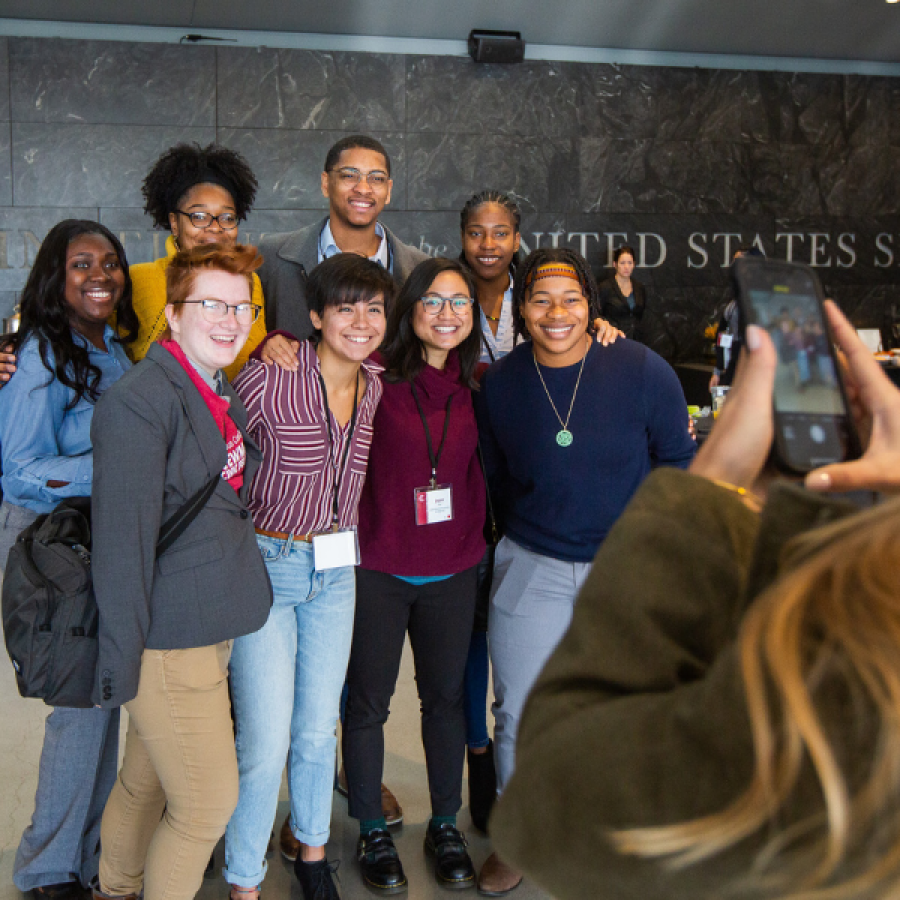
Grounded in our vision, values, and context, our 2025-2030 strategic plan offers a roadmap to guide Campus Compact's work in the coming years.
Campus Compact's strategic plan, launched in the summer of 2024, outlines five years of priorities that we will use to guide us as we advance our mission—to support, engage, and challenge higher education to realize its public purpose to address complex social issues and further equity, justice, and prosperity for all.

Our vision
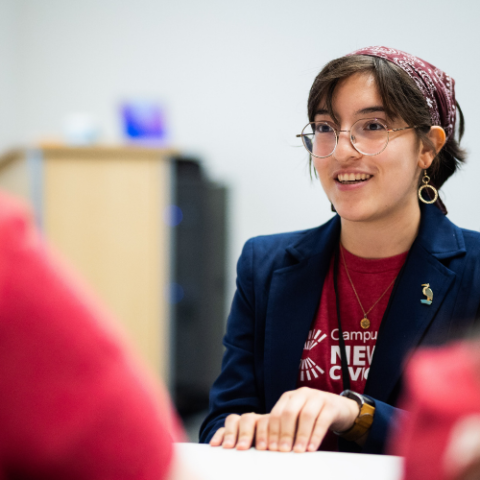
Campus Compact envisions a world in which all of higher education commits to advancing an equitable, accessible, and just democracy—where colleges and universities serve as responsive and transformative agents of change, with students, faculty, staff, and administrators joining as true partners with communities in contributing to our collective flourishing.
Our history & context
Civic and community engagement has advanced greatly since Campus Compact’s founding nearly 40 years ago in 1985. What was emerging in the mid-80s has evolved into a well-established field, with many colleges and universities equipped with robust infrastructures and missions to support civic education, community-based teaching and learning, engaged scholarship and research, anchor strategies, and deep campus-community partnerships. At the same time, Campus Compact has evolved from a state-based affiliate model into a nationwide organization that serves and connects higher education institutions of all types across the US as a field leader and movement builder. Despite the progress we’ve made, there are still critical challenges that our sector must address.
The value of higher education—both for students and for society at large—is a topic of heated debate. A 2024 Gallup poll revealed that Americans’ confidence in higher education had fallen to 36%. Wealth gaps continue to widen among the richest and poorest Americans, with even deeper divides between racial groups and those with and without a college education. Challenges facing students have changed dramatically, with the compounding crises of increasing poverty, global and local conflict, social injustice, racism, climate change, and the fallout from the COVID-19 pandemic negatively impacting student well-being and faith in democracy. The polarization that characterizes our politics and discourse has led to deeper divides across campus and community spaces. Higher education has seen an increase in political attacks and intrusion that limit academic freedom, learning, and our collective capacity to serve all students and create the equitable and thriving communities we seek. And we are still reckoning with higher education’s legacy—including the ripple effects of harm caused by our histories of displacement and physical expansion, exclusion, and perpetuation of inequities.
As has been proven throughout our 40-year history, colleges and universities that embrace their public purpose—leveraging institutional power and resources holistically to contribute to change that benefits our communities and students, promotes equity and justice, and strengthens our democracy—are well-equipped to address these challenges.
Community-engaged faculty, staff, administrators, and students strive every day to further community well-being and build public trust. Colleges and universities—cognizant of their power and influence—demonstrate the value campuses can add when they invest in their public mission by serving as anchor institutions in communities that commit to economic inclusion and mutually-beneficial partnerships.
Similarly, civic and community engagement progresses student development and professionalization, instilling in them the civic skills they need to become active and effective in their careers and their communities. And, as students voice concerns about their future and purpose, civic and community engagement connects them to immediate opportunities to make a real difference and inspires them to take action on the issues they are most passionate about.
The practical, hands-on experiences of civic and community engagement can combat polarization by advancing conflict transformation and bridge-building work on campuses and in communities, helping to heal divides and provide venues for community outreach that further reinforce a positive narrative about higher education.
Community-engaged research and scholarship uncovers action-oriented solutions to address our most pressing social issues by engaging the public directly as key stakeholders and contributors of knowledge, grounding research in the practical realities and specific challenges communities face.
For higher education to reach its full potential, we must eliminate the roadblocks that keep us from being most effective in solving our biggest challenges. All colleges and universities must fully commit to their public mission, countering prevailing narratives by boldly demonstrating higher education as a force for public good.
2025-2030 Goals & strategies
Center student voice & leadership
Champion student civic participation and leadership that fosters a sense of agency, deepens their commitment to social responsibility, and contributes to academic and career success.
- Amplify, uplift, and resource student voice and leadership in Campus Compact, on their campuses, and throughout the field.
- Expand direct student programming and build accessible support systems, including virtual trainings, connection spaces, and resource hubs, that promote a healthy balance across academic responsibilities, civic and community engagement, and personal life.
- Grow strategic and tactical partnerships with national service and other career-focused programming to support students in embedding engagement in their lives beyond college.
- Define and implement civic learning goals and metrics to assess impact in student engagement and national service programs.
Professional development for community-engaged faculty & staff
Build the professional capacity of faculty, staff, and administrators connected to the work of community and civic engagement at the individual, institutional, and field levels.
- Provide context-responsive and tailored resources and training for professional development.
- Collaborate with community-engaged scholars and practitioners to support their capacity to conduct and produce research and advance community-engaged methodologies.
- Intentionally expand the reach of our programming to engage practitioners who have yet to see themselves as a part of the work of civic and community engagement.
- Support and develop professionals through affirming, inclusive leadership pathways that prioritize care, connection, and equity, especially for early-career and underrepresented professionals.
Member engagement
Strengthen pathways and resources for civically and community-engaged institutions and leaders to engage with Campus Compact and each other—with particular attention to community colleges, rural universities, and minority-serving institutions.
- Expand Campus Compact membership and explore new individual, international, and affiliate membership models that round out a robust and diverse coalition of individuals and organizations advancing civic and community engagement.
- Facilitate coalition- and network-building opportunities to foster collaboration, collective
impact, and shared vision among member institutions - Center member voice and leadership to ensure Campus Compact’s offerings are responsive to the needs of the field.
- Increase program and event engagement among member institutions to maximize member value and expand access through targeted development and support.
Narrative change & advocacy
Boldly communicate the impact and value of civic and community engagement to increase public trust and investment in higher education.
- Invest in narrative change campaigns that reinforce the value of civic and community engagement at both local and national levels.
- Foster key partnerships and advance a proactive policy and advocacy agenda to defend and expand civic and community engagement at the state and federal levels
- Strengthen internal and external communications infrastructure to support consistent, values-aligned messaging.
Knowledge Creation
Advance evidence-based research and other scholarly works on new and innovative practices to inform the evolution of the field of civic and community engagement.
- Develop a responsive research and learning agenda informed by ongoing monitoring and analysis of field-wide trends.
- Advance field knowledge and innovation by producing and disseminating accessible, high-quality tools, resources, and publications that demonstrate the importance of civic and community engagement for institutional, community, and student success.
- Expand the reach and impact of research by enhancing its accessibility and relevance across various sectors.
Building institutional capacity
Enhance the responsiveness and capacity of higher education to tackle complex challenges.
- Advance systems-change planning and strategies to foster campus-wide commitment and buy-in to civic learning and engagement, community-engaged scholarship, and institutional partnerships
- Develop collaborative relationships and initiatives to extend the cumulative impact of all the assets of the sector—from national service to engaged scholarship.
- Leverage national service programs to strengthen institutional capacity for civic and community engagement.
Investing in ourselves
Achieve operational excellence that emphasizes culture, capacity, and systems so that our people and partners can thrive.
- Invest in people, resources, and infrastructure that continue to build our priority capacities.
- Foster a collaborative and high-performing work environment supported by clear structures, transparent decision-making, and shared accountability
- Build an organization that centers belonging and inclusiveness.
- Enhance financial and operational systems to responsibly steward our resources, manage risk, and increase efficiencies.
- Diversify funding streams to support campus engagement and capacity to advance civic and community engagement, including expanding foundation support for unrestricted revenue
- Strengthen board engagement in strategic governance, fundraising, and organizational leadership.