From the president
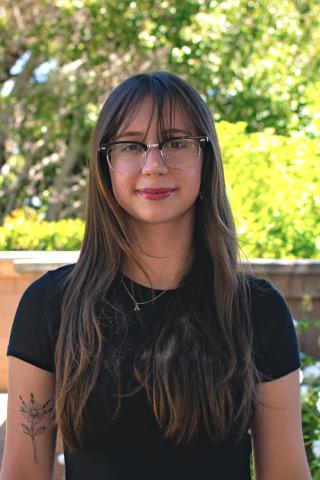
Almedina Hozdic, a third-year student at the University of San Diego, is a passionate advocate for mental health and justice-involved youth. Drawing from personal experiences with mental illness and her brother’s incarceration, she mentors incarcerated youth through the College Corps Fellowship with compassion and purpose. Pursuing a double major in Psychology and Sociology, Almedina’s leadership is rooted in empathy, resilience, and a drive to reform systems. She exemplifies the values of the Newman Civic Fellowship by turning personal challenges into meaningful civic impact.
Personal Statement
Growing up with immigrant parents, mental health was something that they didn’t think about; for them it was just about surviving. However, as a kid I had the privilege to sit down and come to the realization that I was struggling with it. At the age of 12 I was diagnosed with Severe Generalized Anxiety/Social Anxiety alongside Moderate Depression. When I started opening up about my journey with mental health I realized so many people around me were struggling with the same thing; especially my brother. I saw my brother struggle with mental health issues after having a record with gangs, gun violence, drugs, alcohol, and the police. My bother, being system-impacted, has led me to my passion– getting accessible mental care to incarcerated individuals no matter their age.
As a College Corps fellow at USD I partner with Torero Urban Scholars who have given me the opportunity to work inside the Youth Transition Campus in San Diego. The YTC program allows for students and adults to go inside a juvenile hall and mentor young boys and girls. My first time going in as a student leader, I felt my anxiety kick in but the moment an eleven year old boy inside the unit came to the table and started telling us his jokes, I began to smile. As more kids began to pile in I was hearing stories all about their lives and personal interests. However, when I got to talk to them on a deeper level, I noticed how many of them were struggling with their own battles. Whether these battles were with other gang members, their relationships, or their families, these boys didn’t have someone to sit down and talk with them unless it was about their “bad” behavior.
As a second year student, I’m still learning about the social justice issues our society is producing everyday. I’m also still learning about myself and how to deal with talking about my own mental health. However, I believe that I’m still capable of pursuing my passions. I hope to build a better system that requires mental health resources in prisons. I hope to improve the system that allows incarcerated individuals to have easier access to job opportunities and living situations. Most of all, I hope to get justice for individuals who are struggling with their own mental health in a place where they’re already kept from the outside world.