From the president
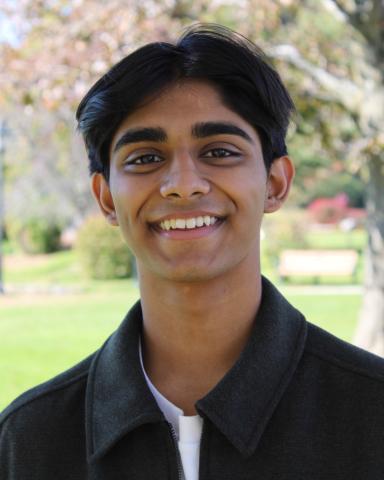
Darsh Patel is a biochemistry and molecular biology major at the University of Massachusetts Amherst, and plans to become a family medicine physician. He is a member of the Community Scholars Program (CSP) - a highly selective two-year, cohort-based community engagement and leadership development program in which students take four classes over four semesters, all designed to support them to do the work of social change while simultaneously participating in aligned community work. Through CSP, Darsh has learned to better understand root causes of social issues and recognizes the need to join in collaboration with community members to address complicated challenges and inequities they face. To fulfil this aspect of the program, Darsh has collaborated with the UMass Mutual Aid Project, spending nearly two years first researching and then implementing a time bank on the UMass campus. Darsh’s passion for positive collaborative change and ease with compassionate leadership is at the forefront of all that he does. He is a change-maker on and off campus and his probing curiosity, constructive optimism and unflagging energy supports his extraordinary commitment to ethical values, communication and leadership.
Personal Statement
During humanitarian disasters, people demonstrate solidarity with one another despite personal differences. But, it shouldn’t have to only be in those times. We can address social issues by having already established systems of community care. Through practicing mutual aid, we can build trust and establish interdependence. I am committed to civic engagement and service-learning because I see the power it holds in creating systemic change. This can be accomplished by small actions that are linked to a larger movement strategy. On campus, I work with the Mutual Aid Project to do just that. Through that project, we initiated a time bank at UMass Amherst, which consists of faculty, staff, students, and community members exchanging services using time as a currency instead of money. The time bank can also facilitate shifting people’s mindsets about service exchange from transactional to relational. It provides equitable access to services by valuing all labor equally, which means people can obtain resources that would otherwise be unattainable in our dominant economy. In the future, I want to become a family medicine physician, where I can combine what I have learned through mutual aid work to meet the holistic needs of my patients.