From the president
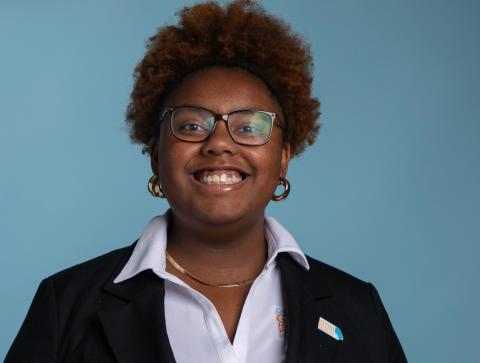
Mackenzie Hickson is a scholar-activist and health science major with a focus in public health at Spelman College. As president of the Ethel Waddell Githii Honors Program Student Association, she fosters intellectual engagement through regular programming and the Habits of Mind initiative. Mackenzie also leads the bell hooks Junior Honors Program, creating a space for high school girls and femmes to develop critical thinking, sovereignty, and community through reading and writing.
Committed to addressing the root causes of social inequities, Mackenzie integrates direct service and systemic change. She regularly volunteers with El Refugio, supporting immigrant families impacted by detention, and works to end food insecurity through service at the Atlanta Community Food Bank and Urban Recipe. Mackenzie’s approach emphasizes relationship-building, empathy, and critical inquiry, allowing her to develop sustainable and community-centered strategies for social change.
Her work demonstrates strong potential for creating innovative and collaborative solutions to public challenges. Whether leading campus initiatives or partnering with local organizations, Mackenzie excels in diverse environments and inspires others to think critically, act compassionately, and advocate effectively for justice.
Personal Statement
Sitting across from a plexiglass screen, connected only by a staticky phone, is the harsh reality for many detained and incarcerated people. The criminal justice system strips individuals of their humanity and isolates them from society. I believe these issues are rooted in systemic inequalities and must be addressed through direct engagement, critical inquiry, and compassionate action.
My civic engagement work focuses on restoring communities through direct contact with individuals in correctional and detention facilities. Through service with El Refugio and collaboration with Hope Hilton at the Metro Reentry Facility, I have begun investigating how incarceration impacts families and communities locally.
As a Newman Civic Fellow, I hope to develop a program where college students engage with justice-impacted individuals through a discussion-based gender studies course. By fostering critical conversations and intellectual community, this initiative would deepen understanding of the criminal justice system and equip both students and incarcerated individuals with the tools to challenge inequities. Though systemic change is slow, I believe programs like this can reduce recidivism, promote empathy, and build a foundation for long-term, community-driven change.