Rural youth often face unique challenges in civic engagement and community participation, yet their voices and perspectives are frequently overlooked in discussions about centering youth leadership or improving rural engagement. Campus Compact is partnering with Hannah Botts, a national youth leader and Program Director of the Rural Youth Voice Initiative, to change that. The Rural Youth Voices Initiative seeks to empower rural youth to better serve their communities, reshape dominant narratives about rural engagement, and encourage rural-serving organizations to center youth voices.
Twelve youth leaders (ages 18–24) from across twelve different states were selected in July to participate in and represent rural communities in this inaugural student-run fellowship. Each Fellow is designing and producing a project that highlights the voices of rural youth and what they wish others knew about rural youth engagement. Fellows were encouraged to design projects that reflect their own community's needs, values, and vision.
You are invited to attend the webinar, “Amplifying Rural Student Voices,” hosted by Campus Compact, on Tuesday, September 30th from 3:00-4:00 P.M. EST, which will highlight their projects and visions for their rural communities.
These are just examples of the projects that the fellows are working on so far:
- Connecting rural students with local professionals to expand career opportunities in the community.
- Renovating local parks and invigorating youth through local service
- Creating a platform to organize rural youth to address pressing issues in their local education.
- Intergenerational storytelling—specifically creating space for Elders and youth to connect, share, and build relationships through the exchange of cultural knowledge, lived experiences, and ancestral wisdom.
In addition, each Fellow is serving as an advisor in the creation of a report (led by Hannah) that will be released this winter on the state of rural youth service and engagement, including how organizations can best support rural youth moving forward.
As part of this Fellowship, each Fellow received $500 to support a narrative change or civic engagement project, as well as a $500 personal stipend for their time. Fellows are a part of a cohort that is meeting biweekly over the summer and early fall to build community, share resources, and engage in personal and professional development. Most of all, fellows are gaining the opportunity to amplify their voices and those of their rural communities on a national stage.
You can learn more about the Rural Youth Initiative and these incredible rural youth leaders by reading about them below.
Rural Youth Leaders
Madison Albers — Kansas
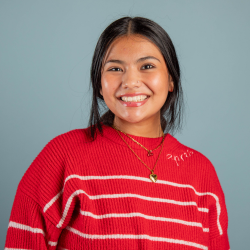 What is the focus of your project?
My focus is civic engagement education for teens in my community.
Why is this project important to you or your community?
I hope to bridge the gap we often face in our education system and equip our kids to be actively engaged citizens in our democracy! So often we don’t realize the problem until we’re reacting to it I want to jump in early and be preventative not reactive.
What's your favorite thing about being from a rural community?
The community spirit and perseverance! No matter the struggle or challenges the community will come together to solve it!
ZaTayvia Hayes — Texas
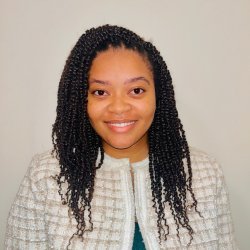 What is the focus of your project?
My project focus area is to renovate Crockett Park in Honey Grove, TX.
Why is this project important to you or your community?
Renovating the recreational park is important to our community because it gives the youth a safe space outside of school and church. This project's goal is to encourage active play while also providing a welcoming environment where young people can build strong relationships with peers from all backgrounds. The new park will serve as a community hub, fostering connection and inclusivity.
What's your favorite thing about being from a rural community?
I love rural communities for their strong, tight-knit and family-oriented connections. Everyone, no matter their background, is deeply rooted in the community, working together to improve it while still preserving that small-town feel. It's a place where shared history and collective effort build a truly special sense of belonging.
Lisa Kennedy — Wisconsin
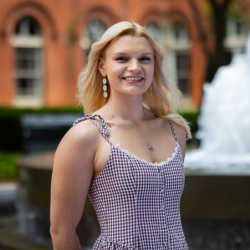 What is the focus of your project?
My project focuses on connecting rural students with local professionals to expand career opportunities and strengthen community ties through place-based learning.
Why is this project important to you or your community?
This project is important to me and my community because I grew up being told that there were no opportunities for me in my rural town. I was told that, if I wanted to succeed, I had to leave. This project helps challenge the notion that there are no opportunities for young people in rural America, and gives incentives for local businesses and community members to network with young people in their own community.
What's your favorite thing about being from a rural community?
Growing up in a rural community taught me the power of place. The power of the place I grew up in was its strong community ties, a tradition of generosity, and the fact that my entire extended family lives here. But, being from a rural community also taught me that power (via opportunity, wealth, etc.) is often unequally distributed across place. I carry with me a recognition of the power of place in all the work I do, which I think will help me create a better future for all young people, regardless of zip code!
Nicole Li — Tennessee
 What is the focus of your project?
Youth civic education and engagement around local elections
Why is this project important to you or your community?
Many rural communities lack opportunities for youth to gain substantive experience in local affairs. My project aims to change that by providing high school students in my hometown with mentorship, training, and networking opportunities.
What's your favorite thing about being from a rural community?
the strong community bonds
Shawn Jiminez — Maine
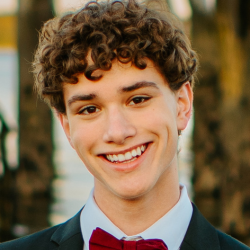 What is the focus of your project?
My project, Maine Students Rising (MSR), is an organization dedicated to amplifying youth voices in education. Too often, students are spoken over in processes of decision making that directly impact spaces of learning. MSR seeks to increase youth visibility by fostering community and providing a platform to address pressing issues. With leadership at the forefront of its mission, the organization offers training in preparing testimony, tracking legislation, policy writing, and understanding structures of governance. By centering youth voices, Maine Students Rising affirms that education must be shaped in collaboration with students. For more information, please contact [email protected].
Why is this project important to you or your community?
This project is important, as it works to address institutional gaps that silence youth voices in rural America. In my community, there exists a problem where decisions surrounding education are not made with young people in the room. It is my hope that the training and community offered through this project inspires more young people to make their voices heard.
What's your favorite thing about being from a rural community?
My favorite part of being from a rural community is the unwavering support system. People come together to lift each other up, whether in moments of hardship or in times of celebration.
Angela Haugen — Montana
 What is the focus of your project?
The focus area in my project is rural literature and other rural set media.
Why is this project important to you or your community?
Media and literature based in rural settings is a subgenre in itself and sheds light to these areas of the world that usually do not get attention. Rural media showcases what our communities have to offer and prove there is complexity even in the smallest towns.
What's your favorite thing about being from a rural community?
I enjoyed the quiet nature of my rural community and how slower paced it was.
Julia Lin — Maryland
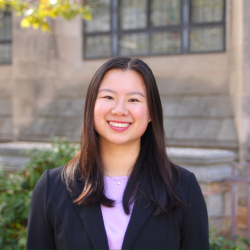 What is the focus of your project?
My project highlights why it is important to increase the presence of students from rural or small-town communities on college campuses.
Why is this project important to you or your community?
Historically, students who attend rural public high schools usually attend community colleges, enter the trades, or serve in the military after graduating high school. A lower percentage of students pursue a four-year degree, which was the case for my own high school. Thus, the rural perspective at higher education institutions is underrepresented. There have been efforts to increase outreach to students from rural and small-town communities through initiatives like the STARS College Network. My project aims to aid these efforts by providing higher education institutions with real testimonials from students that highlight why it is important to admit students from rural communities, what perspectives they bring to a college campus, and how students will use their education to give back to their rural community.
What's your favorite thing about being from a rural community?
My favorite thing about being from a rural community is the deep sense of community and belonging!
Lorna-lei Sua’ava — Alaska
 What is the focus of your project?
The focus of my proposed project is intergenerational storytelling—specifically creating space for Elders and youth to connect, share, and build relationships through the exchange of cultural knowledge, lived experiences, and ancestral wisdom. This project aims to bridge generational gaps often felt in our communities by facilitating dialogue grounded in respect, language, identity, and shared history. Through guided storytelling sessions, cultural workshops, and oral history documentation, youth will not only learn from Elders but also develop skills in listening, reflection, and cultural interpretation. At its core, this work is about relationship-building—restoring the natural transmission of knowledge that has been interrupted by colonization, displacement, and modernization. The ultimate goal is to strengthen cultural continuity, foster mutual understanding, and empower youth to carry their cultural teachings forward in ways that are meaningful to them.
Why is this project important to you or your community?
This project is deeply important to me because it creates intentional space for Pasifika youth and young adults to share their stories, amplify their voices, and reconnect with their cultural identities. Too often, Pasifika narratives are underrepresented or misrepresented in mainstream spaces. By centering their experiences through storytelling, we not only affirm their value and visibility but also contribute to the preservation and revitalization of our cultural knowledge.
What's your favorite thing about being from a rural community?
One of my favorite things about being from a rural community is the deep sense of love, support, and connection that exists among community members. There’s a strong, tight-knit feel that makes you feel seen and supported—whether it’s through everyday interactions or coming together for events and initiatives. Word travels quickly, which often means more participation and a shared willingness to help out in any way possible. That sense of collective care and responsibility is something I deeply value and carry with me in both personal and professional spaces.
Sravan Kodali — New York
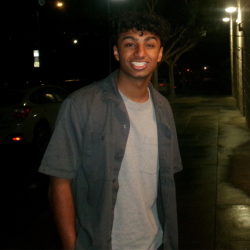 What is the focus of your project?
Identifying and discovering issues affecting youth in rural New York by interviewing civically engaged young people (4H councils, youth boards, etc.). I want to spotlight an on-the-ground understanding of these issues.
Why is this project important to you or your community?
When the nation thinks of New York, they almost always picture New York City; but over 18% of New Yorkers live in rural communities. These communities are facing new and unique issues in housing, healthcare, and workforce participation just to name a few.
What's your favorite thing about being from a rural community?
Small-town values: dedication to community, service orientation, public spiritedness.
Caden Lucas — Kentucky
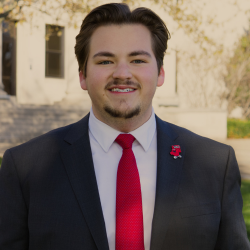 What is the focus of your project?
My project centers on expanding civic participation among college students by equipping them with the tools, knowledge, and institutional support to engage meaningfully in public life. Through student-led initiatives rooted in their own campus communities, it seeks to build lasting structures that empower students not just to participate in democracy, but to shape it.
Why is this project important to you or your community?
In a multipolar and increasingly complex world, access to civic participation is essential to a functioning democracy. For my campus and community, that access is often obstructed. The absence of a nearby voting location poses a real and tangible barrier to one of our most fundamental rights. This project is important to me because it confronts those barriers directly, working to ensure that students and community members are not only able to vote, but are equipped to participate fully in civic life. It’s about making democracy more accessible, more equitable, and more reflective of every voice.
What's your favorite thing about being from a rural community?
What I value most about being from a rural community is the people—the neighbors, storytellers, and everyday faces whose lives shape the fabric of our town. While I’ve grown up knowing many people, there’s always someone new with a story that expands my perspective. Every conversation becomes a chance to listen, learn, and understand those around me.
Semaj Attaway — Mississippi
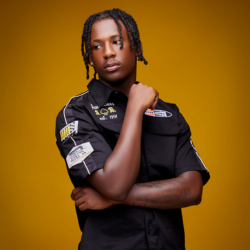 What is the focus of your project?
“Mentorship Through Meals”, a program that pairs young men with chefs and mentors to channel their energy into cooking, entrepreneurship, and communication. The project focuses on dismantling the school-to-prison pipeline by replacing punitive discipline with mentorship, skill-building, and positive opportunities for growth.
Preethika Yetukuri — South Carolina
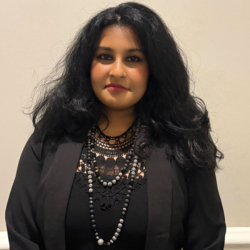 What is the focus of your project?
The Rural Voices Lab seeks to create a virtual-first civic engagement program that empowers rural youth to:
- Produce SDG-aligned policy briefs and community action plans.
- Build civic skills through workshops in critical thinking, storytelling, and policy writing.
- Share their voices publicly through a digital showcase, booklet, and website hub.
- Connect to career pathways through mentorship, networking, and practical opportunities.
The program begins online, accessible from a laptop, but expands to include physical access hubs in libraries and community centers for youth without broadband. Long term, the vision is to establish a tiered opportunity ladder that begins locally and extends to regional, state, national, and global networks.
The initiative is led by Hannah Botts, a Campus Compact Student Design Fellow, with mentorship, fiscal sponsorship, and technical support from Campus Compact staff. You can read Hannah’s full bio at the bottom of the page. Questions about the initiative and how to get involved or support rural youth can be directed to [email protected] or Will Brummett, Director of Student Engagement, at [email protected].
Rural Youth Voices Project Program Director

Hannah Botts
Hannah Botts is a Gen Z civic leader reimagining how institutions connect with communities too often overlooked in national discourse. A Kentucky native, she has advised foundations, local governments, and cultural institutions on youth engagement strategy. As Program Director of Campus Compact’s Rural Youth Voices Initiative, Hannah works to reframe narratives around rurality and reshape how rural community engagement is understood, supported, and sustained.