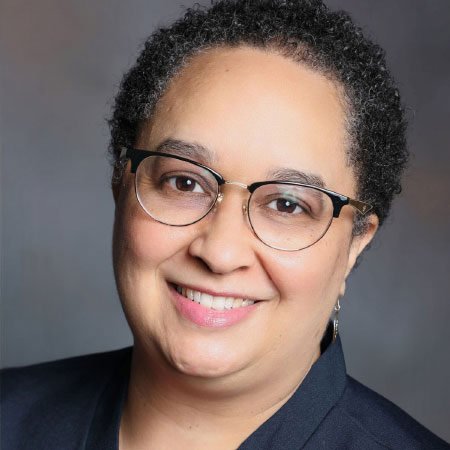
 By Jilo Tisdale, Director of the Bonner Office of Civic Engagement at Spelman College
Jilo Tisdale is a Campus Compact Innovation Fellow and the recipient of a Lumina Foundation grant to take on projects and work meant to enhance the Newman Civic Fellowship program and support student civic development nationwide.
Throughout my journey in various projects, I've learned that each one carves its own path. I often begin with a structured plan, envisioning how everything will unfold. Yet, as I dive into the work, I frequently discover the need for a different approach, new perspectives, and sometimes a complete pivot in direction. You would think I’d be accustomed to this unpredictability by now, but I find myself surprised each time.
When I applied to be part of Campus Compact’s Newman Civic Fellowship Campus Innovation Cohort, I wanted to create a process to ensure that our Newman Civic Fellows had access to excellent mentors. My initial strategy involved conducting focus groups with current and past Spelman Newman Fellows to explore their experiences with mentorship and determine how these interactions had shaped their work.
However, gathering everyone for focus groups—even virtually—proved challenging. Busy schedules, different time zones, and some alumni traveling abroad made coordination difficult. So, I took a step back and decided to collect preliminary insights through a survey. I wasn’t abandoning my focus group idea; I simply needed a starting point.
At that time, we didn’t have established guidelines for how Newman Fellows were matched with mentors. While having a mentor was a requirement, Fellows were allowed to select their own. This resulted in a wide variation in how and why each Fellow picked their mentor. The surveys provided valuable information about:
- Who the mentors were
- Why they were chosen
- The frequency of meetings between mentors and mentees
- Discussion topics during these meetings
While the data was interesting, I felt a sense of dissatisfaction. My goal was to create a process that ensured each Fellow was paired with an outstanding mentor, yet the insights from five students—each recounting positive mentor experiences—seemed insufficient. Why didn’t this feedback resonate with my initial vision?
Initially, I wondered if my survey questions were too limited, as I had intentionally kept them brief to encourage participation. But it wasn’t just that. The survey had revealed three key criteria Fellows used to select mentors: Familiarity, Proximity, and Wow Factor. It also indicated that Fellows valued their mentoring relationships as meaningful. However, my dissatisfaction stemmed from realizing that while all students described their mentors as “excellent” and their relationships as “good,” their definitions of these terms varied widely.
Before I could devise a process for assigning “excellent” mentors, I needed to clarify what that meant. What specific qualities or actions define an excellent mentor? Additionally, understanding why students viewed these relationships as significant was important. I also wanted to know how mentorship had influenced their development. And,was the impact of that influence limited to their time as a Newman Fellow, or did it extend beyond?
I also grappled with my own expectations: Is it enough that students feel they have excellent mentors and experience good relationships, or is there more to consider?
My aspiration was for Fellows to engage in a richer learning experience during their fellowship year, ultimately leading to more impactful projects within the campus and community. Recognizing this additional layer of complexity, I returned to my original commitment: to organize focus groups for a deeper exploration of mentor/mentee dynamics. However, before conducting those, I needed to research best practices in mentoring to formulate a comprehensive understanding that would address my new guiding question:
How can a more intentional approach to mentor assignment in our Newman Civic Fellowship program enhance students' skill development and contribute to the successful, sustainable implementation of their projects, ultimately fostering lasting positive impact in the community?
Mentorship is more than guidance; it’s about forging relationships that inspire change. Adopting an intentional strategy for mentor assignments involves thoughtfully pairing students with mentors whose skills and experiences align with their project goals. This strategic alignment will enhance the student learning experience and equip students to navigate challenges and innovate effectively.
To achieve this, we will need to design structured onboarding for mentors, helping them understand the unique context and details of each student’s project. This kind of preparation will enable mentors to offer tailored advice, bolstering students’ confidence and providing them with practical skills essential for project success. By intentionally matching our Newman Fellows with relevant mentors, we can cultivate an environment on campus where ideas thrive.
 As emerging civic leaders, it is vital for our Fellows to focus on sustainability in their work and mentors can play a critical role in this journey. They can help students identify best practices for project planning, implementation, and long-term viability—such as asset mapping, securing funding, engaging community stakeholders, and developing impact metrics.
Regular check-ins and constructive feedback from mentors will guide students in refining their projects to better align with community needs, ensuring that their solutions are not just innovative but also feasible and impactful. This supportive framework fosters adaptability, empowering students to pivot as needed and build resilient projects that endure.
We want Newman Civic Fellows at Spelman to enhance their leadership skills and capacity for creating lasting positive change. I believe that with the right support and well-matched mentors, students will be more likely to undertake projects that resonate with community members and tackle real-world challenges, moving beyond one-time efforts driven solely by personal interests.
Successful projects build community trust and engagement, essential for long-term impact. When students collaborate with mentors connected to the communities they serve, they gain critical insights into the needs and values of those communities. This partnership not only enhances the relevance of their projects but also strengthens community ties, fostering a shared sense of purpose and collective action.
My hope is that by restructuring the mentor/mentee matching process within our Newman Fellows program and embracing a more intentional approach to mentorship, we will spark innovation across our campus. By demonstrating the effectiveness of this model, we can advocate for similar practices in other programs, encouraging campus Divisions to recognize the importance of matching mentors and mentees based on shared interests and goals.
Cultivating a culture of collaboration and support will encourage our students to think creatively and push boundaries. As they experience the benefits of strategic mentorship in their projects, they will be inspired to explore new ideas and solutions, creating a ripple effect that enriches campus culture.
Reflecting on how a more intentional approach to mentorship can elevate the experience of our Newman Civic Fellows, it’s clear that this strategy extends beyond individual student growth. It’s about nurturing the development of leaders equipped to enact sustainable, impactful change within their communities. By fostering meaningful connections between mentors and mentees, we can empower our Fellows to innovate, collaborate, and ultimately transform the world around them.