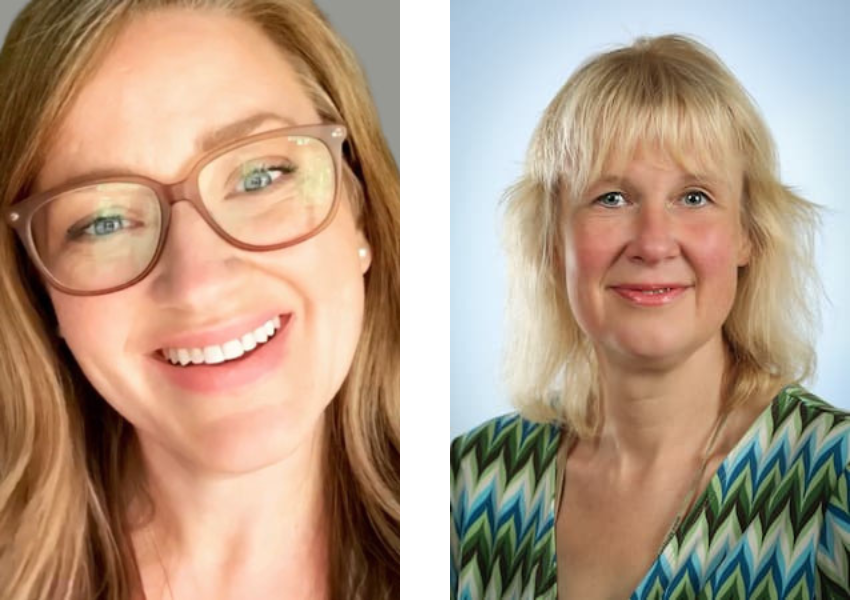
By Katia Levintova and Ashley Heath, Co-Directors of The Center for Civic Engagement at the University of Wisconsin-Green Bay
Katia Levintova and Ashley Heath are Campus Compact Innovation Fellows and recipients of a Lumina Foundation grant to take on projects and work meant to enhance the Newman Civic Fellowship program and support student civic development nationwide.
UW-Green Bay’s Role in Expanding Civic Engagement
The University of Wisconsin-Green Bay is a public regional comprehensive university with a student population of about 10,000, located in a mid-size Midwestern city. Our campus reflects the characteristics of regional public universities nationwide, with a commitment to serving diverse populations and fostering community engagement. These ‘cornerstones’ of higher education play a vital role in educating the majority of students across the nation. They are open access, teaching-focused, increasingly diverse, and heavily embedded in their communities.
We mirror national trends in serving Pell Grant-eligible students, student parents, and first-generation college attendees. Our campus aspires to become a Latino-Serving Institution (LSI), reflecting the evolving demographics of our region, where many secondary schools now serve majority-minority populations. The Carnegie Classification for Community Engagement, awarded to UW-Green Bay last year, recognizes the integral role the Center for Civic Engagement plays in fostering impactful campus-community partnerships.
Our Center for Civic Engagement at UW-Green Bay is a small but mighty team, consisting of two faculty Co-Directors, an Academic Program Manager, and an AmeriCorps VISTA member. Despite its size, the Center has made a significant impact by bridging the divide between campus and community through a collaborative approach. This commitment is reflected in our Community Advisory Board and our curricular and co-curricular programs. Although Civic Engagement can take many forms, our campus defines Civic Engagement as 'a culture of public service and engagement...developing civic identity for students, faculty, staff, and community members.' This guiding framework fosters sustainable, mutually beneficial partnerships aimed at fostering greater justice in the world.
Since its establishment in 2017, our Center’s portfolio of initiatives has grown to include notable programs such as our signature Civic Scholars Leadership Program, an AmeriCorps VISTA member, and the Newman Civic Fellowship. Other highlights include the Civic and Community Engagement Certificate, campus-community gatherings and celebrations, and expanded opportunities for community-based learning through paid internships, independent studies, and partnerships with like-minded allies on campus.
The Impact Enabled By Our Newman Civic Fellowship Campus Innovation Grant
As our civic programming expanded, we began exploring ways to better integrate our offerings, aiming to create seamless community-engagement pathways rather than episodic experiences. With support from this grant, we envisioned growing our Civic Engagement tree by adding new branches to expand its reach and deepening its roots to strengthen its foundation. Central to this growth was integrating our Newman Civic Fellowship more fully into our programming.
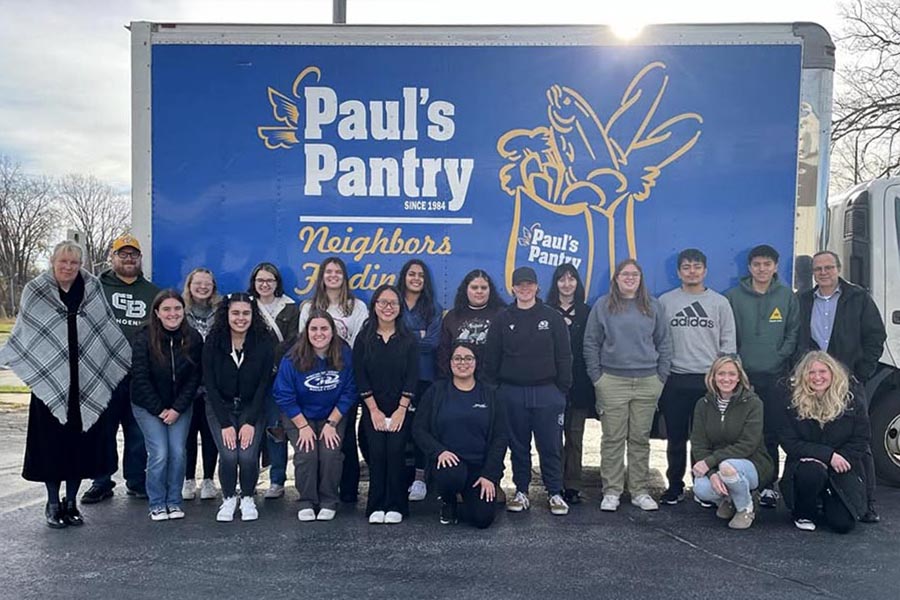 We thought our Civic Scholars Leadership program would serve as an excellent training ground for prospective Newman Civic Fellows. By refining our curriculum and creating incentives for students, we aimed to cultivate an energized, well-prepared pool of Newman applicants. To achieve this, we introduced FEAST (Fundraising, Engagement, and Allocation of Sweet Treats) as the culminating activity of the fall Civic Scholars Leadership Practicum. This practicum enables students to explore the community, analyze its challenges, and evaluate solutions provided by nonprofits, businesses, and government.
FEAST serves as the capstone of the Civic Scholars fall practicum, bridging exploration and action. By designing solutions to pressing community issues and presenting to an engaged audience, students lay the groundwork for Newman Civic Fellowship applications.
Occurring at the end of the Civic Scholars Fall practicum, FEAST completes a semester of student exploration by moving them from observing and reflecting to the domain of action. FEAST pairs students in small groups and tasks them with selecting a pressing community issue, proposing a solution, and outlining a plan of action that incorporates the community partnerships necessary for implementation.
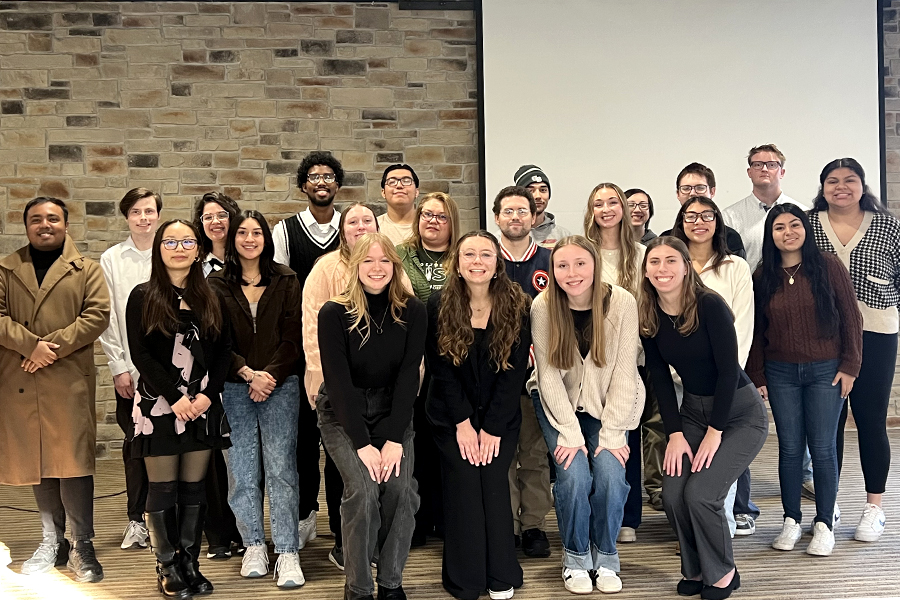
After preparing their “elevator pitches” (3-4 minutes maximum), groups present in front of community and campus allies, including their peers, and the audience (admitted for $1 to raise funds) ranks the proposals. The top five vote-getters are nominated for the Newman Civic Fellowship, positioning them to propose specific projects for their fellowship experience—grounded not only in theory but also in practical application. This process equips applicants with a clear focus on their chosen issue, identifies potential community mentors and partners, and provides a roadmap for leveraging campus and community resources.
 Concurrently with that innovation, we also wanted to strengthen support systems for the Newman Civic Fellowship itself by creating more guidance and structure and instilling better accountability—both for the Fellow and for us. To enhance the Newman Civic Fellowship experience, we incorporated it into our academic credit system and began exploring additional academic requirements to maximize the value of this national professional development opportunity.
Finally, as our campus expanded its community-based learning offerings—and with an eye toward leading in the upcoming HIPs (High-Impact Practices) reforms—we introduced the Civic and Community Engagement Certificate. This certificate integrates Civic Scholars, the Newman Civic Fellowship, existing community-based HIP classes, and a variety of rich, civically focused co-curricular experiences offered by our campus and community partners. We realized that many students had already completed—or were well on their way to completing—many of these experiences. Our goal was to elevate and formally recognize the civic and community contributions of our students.
The Community Advisory Board embraced the idea, recognizing it as a valuable and much-needed credential for UW-Green Bay graduates. This enthusiasm was mirrored by strong support from our administration. Buoyed by their enthusiastic support, we eagerly set about implementing these transformative changes, inspired and enabled by the Campus Compact Innovation Grant.
What We Accomplished
Our first FEAST was a success—students were prepared, eager, and the community responded. We raised $300 and had a fantastic pool of students ready to apply for the Newman Civic Fellowship. We had four extremely strong applicants, and when the selected student had to pursue other life goals, we had the runner-up ready to step in on very short notice. Our other runners-up would also be equally well equipped to assume their roles on day one.
We also benefited immensely from being part of the first Innovation Grant cohort. It gave us so many ideas on how to make our Newman Civic Fellow’s experience more meaningful. We now count the fellowship as three academic credits and require deliverables in the form of civic dialogue cafes, open to both the campus and the greater Green Bay community, on topics related to their projects. We also require a reflection paper and other Fall semester requirements.
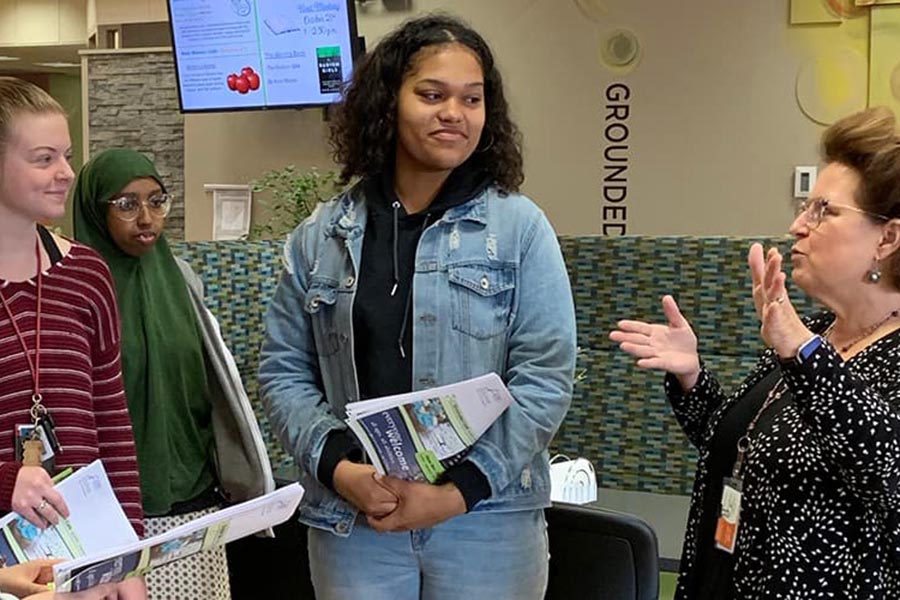 We incorporated the Fellow into our biweekly meetings for better communication and mentorship. Additionally, we gratefully learned from the guiding documents our colleagues shared with us, which helped us develop our own work plan templates and community mentor selection and guidance processes.
Our Community and Civic Engagement Certificate was approved, and we are now seeing the first students enrolling in it! Among them are current and former Civic Scholars and current and past Newman Civic Fellows. A couple of students have already completed all the requirements, while others are close. And we’re just getting started!
Next Steps: Improvement and Assessment
This year, in addition to all the innovations we envisioned and implemented to make our Newman Civic Fellowship more integrated and rigorous, we also added a faculty mentor and a peer mentor (a former Newman Fellow) as support systems. It will be interesting to see if these additions prove to be helpful or not. We are also eager to learn about our deliverables, i.e., the dialogue cafes, and how this part of the fellowship unfolds. We also need to find ways to bring more students into our orbit via our new certificate program.
The Newman-anchored certificate should help us reach more community-engaged students, beyond just the Civic Scholars. We even learned non-degree-seeking students can take our certificate, and perhaps we can link the Newman Civic Fellowship even more strongly to the community. We also plan to explore partnerships with our Continuing Education allies to broaden the reach and impact of these programs.
Key Takeaways From Our Experience
For colleagues planning to implement innovations, we have one piece of advice – budget more time than one year! It is only in year two that we are starting to see the contours of the changes. So, please plan for at least a 2 year cycle.
Related to that, make sure you have plan B for how you would spend the grant money, should some innovative ideas not pen out. We are very grateful for the funding that allowed us to further our changes but in a slightly different (though still very student-facing) manner than originally planned.
We also are excited about the next cohort benefitting as much as we did from our monthly meetings, exchange of ideas, support, and sharing materials. This was one of the best outgrowths of our participation in the grant work. We found a wonderfully supportive community that nourished us when things got tough. We actually looked forward to cohort meetings.
 And take it all in – the way in which our grant facilitators provided structures, connected us to resources, became our cheerleaders all made an enormous difference in how much we got out of the grant work. We now even model some of the techniques in community building that we are “borrowing” from Campus Compact resources and experts for our own meetings with community members, students, and colleagues.
As teachers, we are always on a lookout for what works in a classroom and in a board meeting, and we are certain that people who are lucky to be selected to continue this work, will learn a thing or two about how to be an effective classroom or meeting host and then can pass it to their own students.