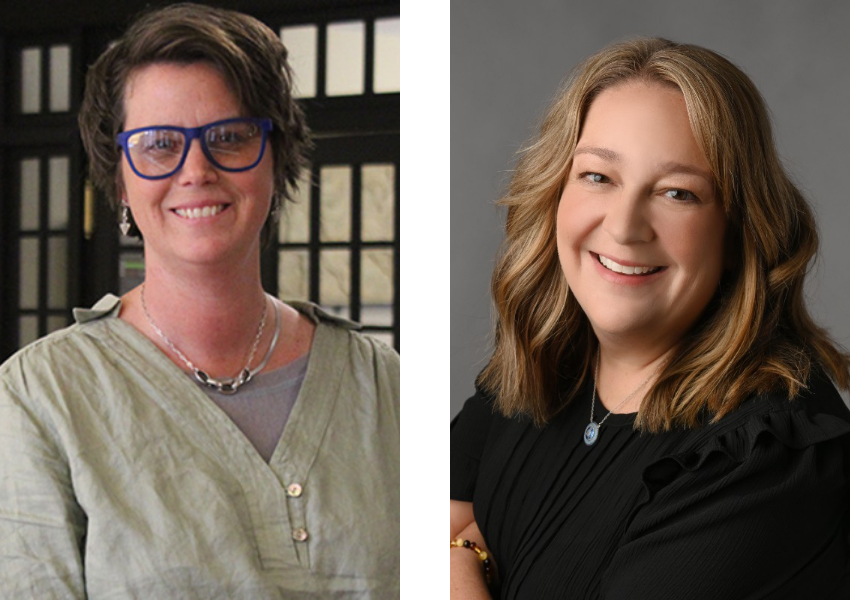
By Amanda Wittman, Director of the Binienda Center for Civic Engagement, Worcester State University, and Laura Roberts, Assistant Teaching Professor, Worcester Polytechnic Institute, and Director of the Worcester Community Project Center
Amanda Wittman and Laura Roberts are Campus Compact Innovation Fellows and recipients of a Lumina Foundation grant to take on projects and work meant to enhance the Newman Civic Fellowship program and support student civic development nationwide.
Innovation in the academy is a tricky concept. On the one hand, higher education is a “durable institution” (Lombardi, 2013) with long-held traditions and practices that differentiate it from quick moving sectors like entrepreneurship.
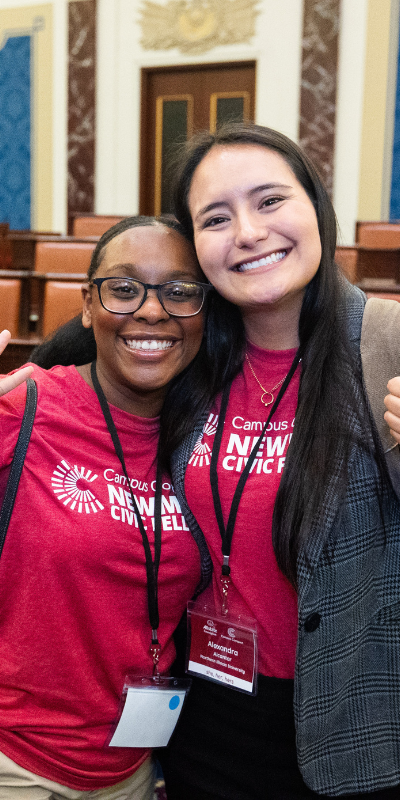 On the other hand, as loci of knowledge creation, the capacity to innovate is built into the mission of what we do – it’s the water in which we swim. And innovation as a framework is tricky. It is malleable, and better understood as a flexible concept rather than a fixed meaning. You can imbue the idea of innovation with the sense you need it to be.
In the case of this learning cohort, supported by Campus Compact, innovation became an invitation. An invitation to think in new ways about programs and student experiences and about how we might better understand networks that support innovative practices.
As we’ve learned through this blog series, practitioners and faculty from across the Campus Compact network spent two years in a learning cohort to operationalize suggested innovations of their Newman Civic Fellows program.
From rethinking mentoring practices to developing frameworks to make meaning out of failure, this cohort took seriously the idea that innovation can help higher education be “developmental, transformational and equitable” (Mintz, 2022).
The innovation that we both piloted in our city was to consider our Newman Civic Fellows as part of a larger network of civic leaders. Worcester, Massachusetts has approximately 210,000 people and eight institutions of higher learning, with four of those supporting a Newman Civic Fellow. What would it look like, we asked, for us to bring those Fellows into community with each other to develop as a network of civic leaders?
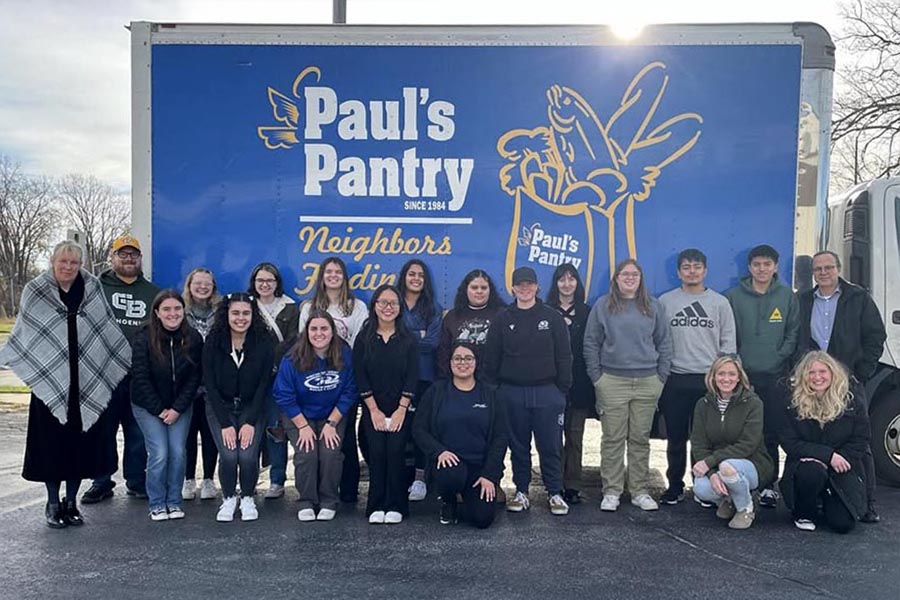 It turns out that this is difficult – our Newman Fellows are deeply embedded on their own campuses. However, two of them traveled together to the annual Newman convening, providing support through travel anxiety, and we are planning a group trip to Boston to lobby the state legislature on issues important to the Fellows.
We found that leveraging this Innovation Grant to bring together the mentors across the city will most likely be where the sustainable change occurs. After all, our students will move on, but this group of mentors can continue as the roots of a Newman Fellowship ecosystem. Staying flexible and being willing to pivot and learn became keys to our innovation practice.
 As the members of this innovation cohort move on from the structured learning community, the facilitated space, and the financial and human resource support provided by Campus Compact, we must all consider how to continue to build out this larger network of innovators in higher education.
As Tiernye & Lanford predicted in 2016, “higher education is currently confronted by global forces that necessitate innovative research, innovative pedagogies and innovative organizational structures.”
This cohort co-created innovative research and writing, developed new teaching and learning practices, and tested cross-campus structures that push the boundaries of how students often interact. The learnings from this cohort suggest that, with support, we can all navigate this tricky landscape of innovation in the academy.