By Bobbie Laur, President, Campus Compact
For higher education to truly advance its public mission, we need a unified strategy to advocate for the resources and partnerships that sustain civic and community engagement work. In our 2025-2030 strategic plan, Campus Compact laid out a policy and advocacy agenda as a deliberate step toward ensuring that civic and community engagement are recognized not just as institutional values, but as nationwide priorities. Our policy work is about fostering opportunities for students to actively engage in our democracy, rebuilding the public’s trust in higher education, and demonstrating that our institutions are vital anchors for healthy, functioning communities. And it’s about finding the resources and partners campuses need to truly make this civic and community engagement a national movement. We’re already taking proactive steps to secure the public trust and investment needed to tackle society’s most pressing challenges.
Earlier this month, we hosted the 3rd Annual Policy and Impact Summit in Washington, D.C., which served as a powerful catalyst for this strategy. Bringing together nearly 100 presidents, policy experts, and senior leaders from colleges and universities across the country, the summit provided a unique space to imagine what it will take to rebuild and foster a new era of dialogue and progress with our elected leaders, particularly those in Congress. A key outcome of this gathering will be a strategic roadmap designed to provide a clear path forward for collective action and impact. We would like to extend a special thank you to the Mellon Foundation for their generous support of the Policy and Impact Summit and their partnership in the ongoing development of our strategic roadmap.
As we look ahead, Campus Compact is committed to providing the resources and tools necessary for our members to navigate policy and empower campuses to play a role in this national movement. Together, we are ensuring that the future of higher education remains deeply rooted in the public good.
Policy & impact in practice
Learn about the variety of ways policy & advocacy work can contribute to a stronger and more robust democracy
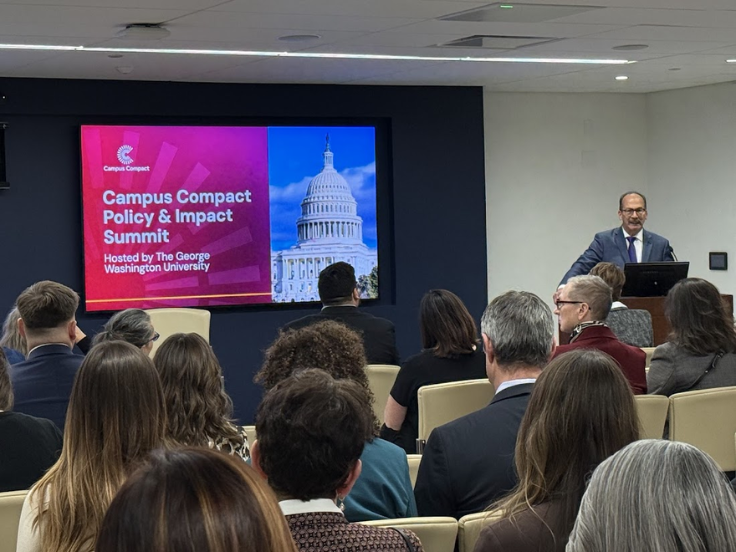
Recap: Campus Compact’s 3rd annual Policy & Advocacy Summit
Read a recap of the recent Policy & Advocacy Summit, which gathered presidents, chancellors, and senior leaders from across the country in Washington, D.C. to imagine ways we can foster a new era of dialogue with elected leaders.More
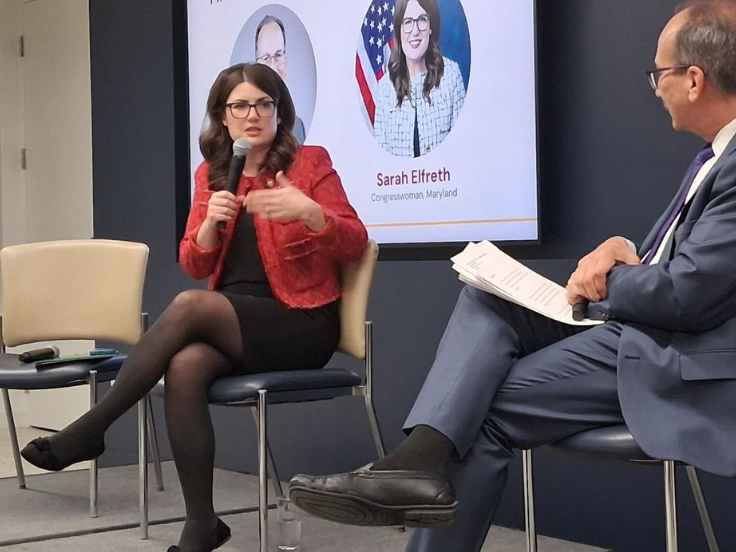
Building on a bipartisan foundation for community and civic engagement
In this blog post, Bill Bates, a founding partner with Washington Navigators shares some insights from members of Congress and how we can work with legislators to rally support for civic and community engagement work.More

Future Caucus finds hope in young political leaders who choose solidarity over division
This blog post from Future Caucus highlights areas for hope in young leaders who serve as elected officials at the local, state, and federal level.More
Get involved: advocacy and policy work
-
Check out the report “The Exit Interview” from Future Caucus to explore the challenges facing emerging lawmakers and envision where higher education might contribute.
-
Read Lorelei Kelley’s article, “Digitizing Democracy: Bridging the Gap Between Congress and Higher Education Through AI and Modernization” to learn how Higher Education can more effectively engage with congress through efforts to modernize.
-
Use the “Guide for Organizing Civil Society Field Hearings” resource as a teaching tool to learn about the role of Congress in the Constitution and take action.
-
Leverage resources from the Campus Free Expression Project to find policy and program suggestions that restore open discourse on campuses and foster a welcoming and inclusive environment for robust intellectual exchange.
-
Access “The Change Leadership Toolkit for Advancing Systemic Change” for a research-based, step-by-step guide for campus leaders at all levels to better understand systemic change, their own systemic change ecosystem, and how they can map out the opportunities they have, the barriers they must overcome, and the strategic change leader “moves” or actions they can take to more effectively and manageably reach change goals.


Join Campus Compact
To leverage the full benefits of Campus Compact at your institution, join our coalition. Campus Compact membership offers valuable information, powerful networks, and opportunities to work collectively with peers across the country.