By Lindsey Ravizza, Director, National Service & Bella McKinney, AmeriCorps VISTA Recruitment and Outreach Program Coordinator, Campus Compact
As of 2023, the last time the USDA published its annual Household Food Security Report, 1 in 7 Americans faced food insecurity. College students’ access to food is even more perilous. National averages estimate that 1 in 4 college students experience low or very low food insecurity every month, with some institution types like private for-profit colleges (32.9%) and HBCUs (38.8%) seeing much higher rates of food insecurity in their student populations (The Hope Center for Student Basic Needs).
Part of Campus Compact’s mission is to partner with communities to address complex social issues and further equity, justice, and prosperity for all, and addressing hunger among both college students and community members is central to that mission. Not only is addressing basic needs connected to higher education’s public purpose, but it’s also essential to creating a culture of civic engagement. In their report released this past summer, our Student Design Fellows explicitly named that “across every demographic, college students face a lack of equitable access to basic needs, which is the most prevalent barrier to participation in civic engagement activities. By providing proactive, student-centered, evidence-based wraparound services that offer personalized and coordinated assistance to help students overcome barriers to entry, campuses can reduce barriers to student leadership participation.”
While hunger on college campuses is not new, the issue of food security is magnified and exacerbated by the federal government shutdown’s impact on critical safety net programs relied upon by both communities and students. Food insecurity is a wicked problem that, especially without federal basic needs programs, requires a multi-faceted approach. By engaging diverse stakeholders across our campuses and throughout our communities, and by deploying layers of support to meet this moment of heightened need, college campuses can be part of the solution for the many college students and community members facing increased food insecurity. In this issue of Common Cause, we’ll share some ways we’re already combating food insecurity and offer some resources you can use to expand this work on your own campus.
Cogenerational engagement in practice
Learn about existing campus programming where older people and younger people come together to achieve common goals.
The Campus Compact VISTA Program Builds Capacity for Food Security Programming
By leveraging the year-long capacity-building service of a full-time AmeriCorps VISTA member, campuses improve the efficacy, efficiency, and reach of food insecurity programs. As a result of our 2024-25 VISTA cohorts’ efforts, our partner campuses distributed over 100,000 pounds of food to more than 10,000 low-income students and community members.
Some of this year’s AmeriCorps VISTA projects that address food insecurity include:
-
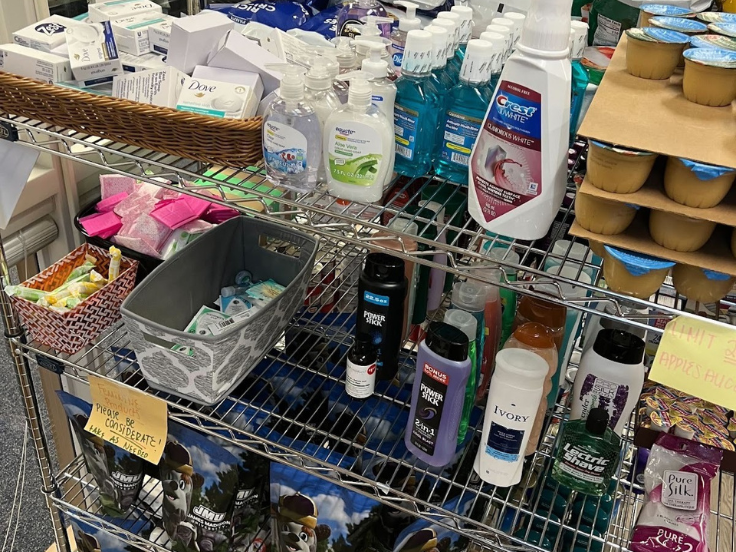
At James Madison University, a public university in Harrisonburg, VA, second year VISTA member Zora seeks to increase the capacity of JMU’s on-campus food and hygiene pantry and strives to educate JMU’s community on recognizing and combating food insecurity. To achieve these goals Zora is writing grants to secure more funding for the pantry, conducting outreach to increase pantry utilization, and developing resource navigation tools for food insecure students.
-
The University of Texas at El Paso’s Campus Compact VISTA project takes a different approach to solving hunger on campus. On a campus where more than 3 out of 5 students face food insecurity, our VISTA Member, Brianna, is advancing campus-wide food security initiatives, streamlining a diverse array of solutions and initiatives carried out across disparate offices and departments on campus. By doing this work, Brianna is able to ensure students are aware of and utilizing the resources available, while also cataloging persistent gaps in the food security landscape.
Newman Civic Fellows use mini-grant funding to find innovative solutions to food insecurity
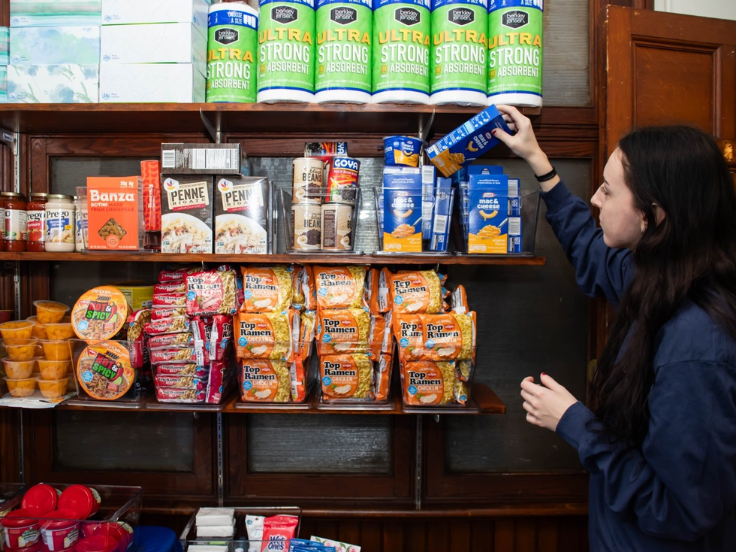
Newman Civic Fellows used available mini-grant funds to make an impact on hunger in their communities. Projects included Jacob Stolberg’s work with Catherine’s Cupboard at Salve Regina University and Indie Lorick’s work with Agnes Scott College’s Supply Closet and Circular Economy.

AmeriCorps members address food insecurity by increasing access to locally sourced food
At Colby-Sawyer College, Campus Compact EnviroCorps members are approaching food security through the lens of nature conservation by increasing the supply of locally sourced food and also bridging that work to the community through a series of garden and educational projects.
Get involved: Addressing food insecurity
-
Apply to host a Campus Compact AmeriCorps VISTA to build capacity for food insecurity initiatives on your campus! Campus Compact places AmeriCorps VISTA members on participating host site campuses for one-year, full-time terms of service where they build capacity for campuses and their partners’ anti-poverty initiatives. We are now accepting host site proposals for the 2026-2027 academic year. Attend a host site info session or read our request for proposals to learn more.
-
Register for our next Navigating Uncertainty session on November 7 at 12:00 PM Eastern to discuss food insecurity in the context of the current government shutdown. Participants will hear from the Hope Center for Basic Needs’ Director of Policy and Advocacy, Mark Huelsman, who will discuss ways that recent federal policies are impacting student basic needs.
-
Check if your institution is a part of the Swipe Out Hunger network. Swipe Out Hunger is a national nonprofit that encourages students to donate unused “swipes” for on-campus dining to their food-insecure peers. If your campus is already partnered, check out their resource library, which includes a food drive guide and a toolkit for funding your campus pantry. If your campus has yet to join this free network, advocate that you do.
-
Consider what steps you can take to support food insecure students. In her 2025 article, Hungry for Knowledge: Food Insecurity and How it Affects College Students, Virginia Wickline of Georgia Southern University provides a list of actionable steps faculty and staff can take to support their students:
-
Recognize the prevalence of food insecurity and acknowledge its impacts on your students.
-
Provide a snack station in an accessible, but discrete location in your classroom or office.
-
Find out if your campus has a pantry. If it does, learn how you can help and make sure your students are aware of its location and operating hours. If it doesn’t, advocate for one to be created!
-
Ask student services if they have a resource list that includes information on local food banks and meal programs, along with guidance on how to access federal safety net program like SNAP. Share this with your students.
-
-
Keep connected and informed through the National Coalition for College Student Essential Needs (NCCSEN), a nationally coordinated effort centering students' essential needs. They hold regular meetings and run an active listserv, which you can join here.


Join Campus Compact
To leverage the full benefits of Campus Compact at your institution, join our coalition. Campus Compact membership offers valuable information, powerful networks, and opportunities to work collectively with peers across the country.