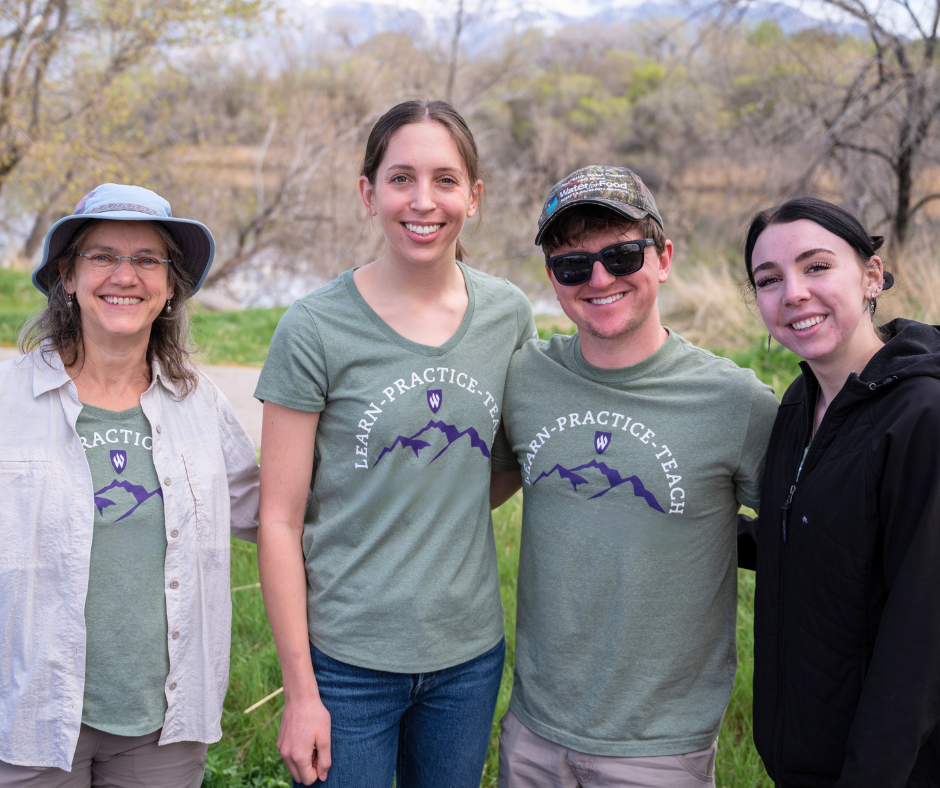
Weber State University (WSU), initially Weber State Academy, is a known leader in campus-community environmental stewardship. When the opportunity presented itself for their campus to join Campus Compact’s EnviroCorps (CCEC) program in 2023, host site supervisor Bonnie Christiansen jumped at the chance. Bonnie has been the Sustainability Programs Engagement Manager at WSU’s Sustainability Practices Research Center (SPARC) for ten years. She saw hosting AmeriCorps members as a way to strengthen their community programs by installing energy efficiency measures in residential homes in the community to cut energy costs and reach SPARC’s conservation goals by 2040.
SPARC set a goal of completing thirty-five home energy walk-throughs and installations in the community before Izzy, Shae, and Andrew joined their team for the 2024-25 program year. After attending CCEC’s Early Service Training in Maine, Izzy started building the infrastructure and programming to support their team’s home energy audits, low-tech interventions, and community events while establishing local partnerships. She established clear Qualtrics forms and project materials in preparation for their team’s plan to complete activities all over the state.
Some of their early projects included energy assessments to provide homeowners in Ogden, Utah, with in-depth solutions. Weber’s EnviroCorps members described each house as “a learning opportunity.” They checked for cracks in caulking around windows, weather-stripped along the edges of arched doorways, and installed low-flow water aerators to improve residents’ comfort and home efficiency. Residents and homeowners adopted the same curious mindset, approaching assessments with open arms. One household shared their energy conservation efforts with members, which complemented recommended interventions and led to lasting, visible changes for their home. Other residents wanted to learn how to implement fixes themselves, with one homeowner, a Chemistry professor, opting to caulk her own windows because of her genuine interest in knowing how to do it herself. This organic enthusiasm continued to grow as members connected with the state’s essential initiatives, which retrofits homes that have incomes no more than 200% of the federal poverty level with wall, attic, door, and window installations. These essential partnerships Izzy helped facilitate gave members additional training to serve homes with larger struggles. This made their program more credible and appealing to their campus community, with professors being quick to participate and refer residents.
Unbeknownst to their team, however, the spring season would prove to be the most challenging despite the brewing interest in their program. After Izzy graduated from Weber’s EnviroCorps program in April, the team had to change course to navigate schedule changes, grant revisions, and priority shifts. Shae and Andrew were able to build upon the campus support that Izzy initiated, advocating for new needs, creating new partnerships, and pouring into Weber’s existing partnerships to keep community members engaged. Instead of completing projects all over the state as originally planned, they narrowed their focus to complete energy audits in Weber and Davis counties while planning interactive environmental education events. Their most notable engagements—the Intermountain Sustainability Summit, campus Earth Day event, and Ogden River Cleanup—served as major turning points that got their efforts back on track.

For months, Shae and Andrew were significantly involved in preparing their campus to host the Intermountain Sustainability Summit. It’s a two-day annual event where at least 400 environmental leaders and 50 speakers gather to educate community members about environmental stewardship. Shae hosted a networking social at a temporary campus ceramics exhibit about the “permanence of Earth.” Environmental stewardship professionals had a space to network and learn more about the work being done across the region. Andrew spearheaded the awards segment to recognize local leaders, designing the award rubrics and coordinating submissions. He also moderated a panel discussion about energy-efficient architecture, specifically examining the efficiency of a local library in Salt Lake City. At the event, each of the CCEC members took turns handing out resources and educational materials while tabling at the event. Overall, the Summit was an incredible way to center Utahns on issues related to energy efficiency, water conservation, and land management. The event had a turnout of over 450 participants, highlighting the importance of this type of dialogue to community leaders in the Intermountain West region.
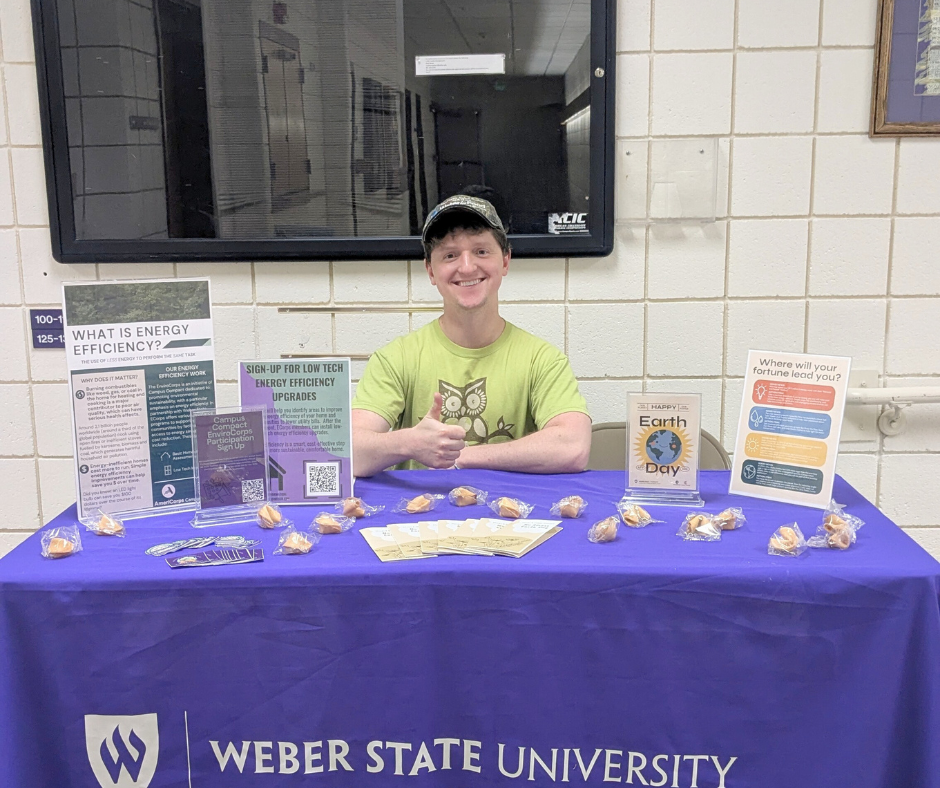
Their two-part Earth Day event was just as successful. Because the events were held during finals week, the CCEC members decided to focus on conservation and environmental education as they relate to stress relief. The first part promoted conservation in connection with the WSU Stress Relief Center. Attendees could learn about the connection between relaxation and spending time in nature while highlighting the importance of conservation through a fortune cookie activity. Part two of Earth Day was an event held at the campus Greenhouse. It included self-guided tours where participants could read facts about how the featured plants contribute to stress management and improve daily life. Both activities were open to the public, resulting in more people forming deeper relationships with the environment than WSU’s EnviroCorps members ever expected.

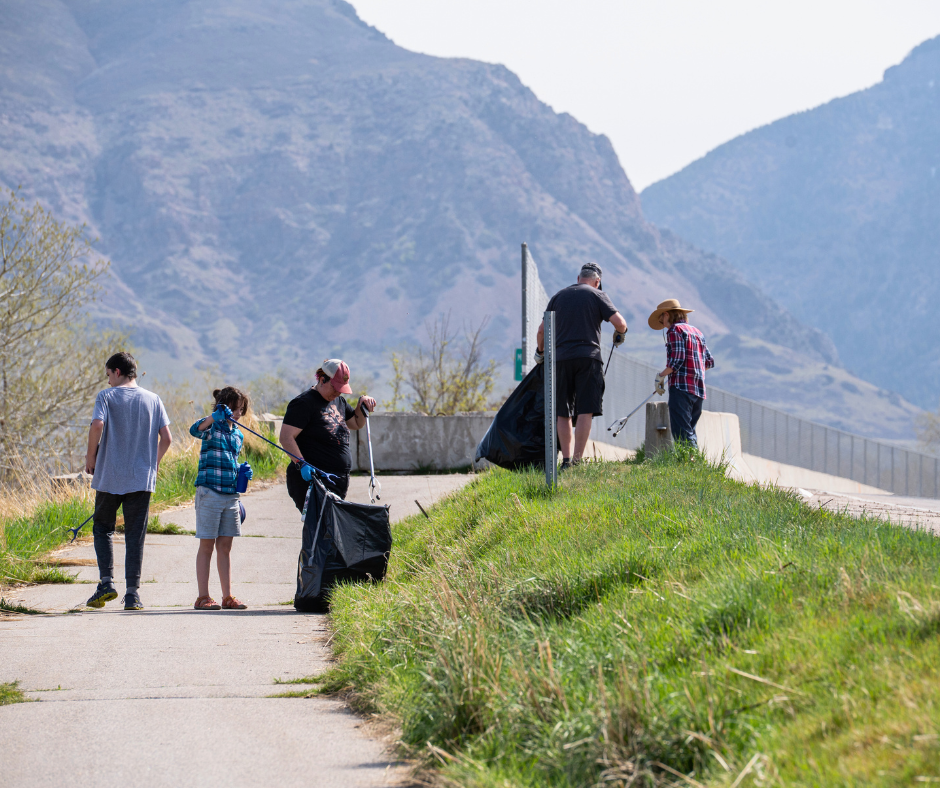
The Ogden River Cleanup helped locals foster their connection with nature even more. Focused on improving ecosystem functions, WSU’s EnviroCorps members brought together over 35 volunteers to collect trash that accumulated in and around Odgen’s 21st Street Pond. It was one of the first events that truly solidified their presence in the community, raising awareness about their nature conservation projects on a larger scale. The river clean-up even served as a recruiting event for the home energy efficiency walk-throughs, with many of the participants signing up for both programs. Collectively, Shae shared with the national EnviroCorps team that they “removed a significant amount of debris, including: three mattresses, four grocery carts, and half a dumpster’s worth of trash from the pond, its surroundings, and the Ogden River” that day. While clearing out the litter, they spotted pelicans and other wildlife that would directly benefit from their restored habitats. It was an aha moment and a rewarding experience for everyone who participated in the cleanup, as they were able to see the difference their time and interest made.

Although their service term and Weber’s participation in the CCEC program are winding down, Shae and Andrew are finding reprieve in projects at WSU’s SPARC Home for Sustainable Living while analyzing the impact of community events like the Ogden River Cleanup. The SPARC Home for Sustainable Living was originally constructed in collaboration with WSU’s Department of Construction & Building Sciences students and the City of Ogden. Previously abandoned, the home was intentionally designed and built to conserve energy for the homeowner and nearby neighbors with automated energy preservation and solar-powered integrations. The home presents more opportunities for Shae and Andrew to learn about regional insects and wildlife. They also weed the grounds of the home weekly, which serves as a team bonding activity.
During this time together, they’ve been able to connect about upcoming plans and reflect on how much their cohort has accomplished this year. They’ve completed 24 out of the 35 home energy walk-throughs and low-tech interventions WSU has set out to do, and plan to enhance the data collection process to track ongoing interventions. Partnerships with state allies like the City of Ogden continue to flourish, and they’re connecting with Greenwood Charter School to present a composting and environmental stewardship educational event for K-8 students soon. They’re also looking forward to hosting two energy efficiency workshops this July, which will serve as an outline for future events hosted at the SPARC Home for Sustainable Living. Even though Izzy, Shae, and Andrew will graduate as Weber’s last CCEC cohort for a while, they’re proud that their service has provided WSU with the social support and capacity to continue their energy efficiency efforts going forward. Their grit and follow-through will certainly keep WSU’s reputation as a prominent advocate for environmental stewardship in Utah alive and well.
Reflecting on the year’s success, Bonnie was impressed that their small but mighty team's efforts helped to save utility costs for their campus community. In a state where AmeriCorps isn’t as recognized as it is in others, she sees their team’s efforts as an example of what can happen when like-minded people share a responsibility, passion, and interest in caring for the planet and their communities. For Bonnie, hosting AmeriCorps members was a rewarding experience and a chance worth taking.
“Having people who are dedicated to specific problems is how we make an impact,” she explained. Even with uncertainty, WSU’s EnviroCorps team stayed true to championing their cause of educating their community about energy efficiency and sharing crucial resources—a service that Bonnie notes inspires others to do the same. As a host site supervisor, she saw how members blossomed as she learned more about their interests, career goals, and supported their drive for community-building. She’s now looking forward to launching a pilot DIY energy workshop for residents under a new grant while seeing how Izzy, Shae, and Andrew continue to turn the curiosity of Utah residents into powerful action after they graduate from the EnviroCorps program.