In the past year, Stetson University has become a proving ground for community-centered environmental conservation work thanks to the dedication of three Campus Compact EnviroCorps AmeriCorps members: Brandon, Avery, and Phoenix. As their term of service draws to a close, their story is one of ambition, impact, and persistence in the face of challenges.
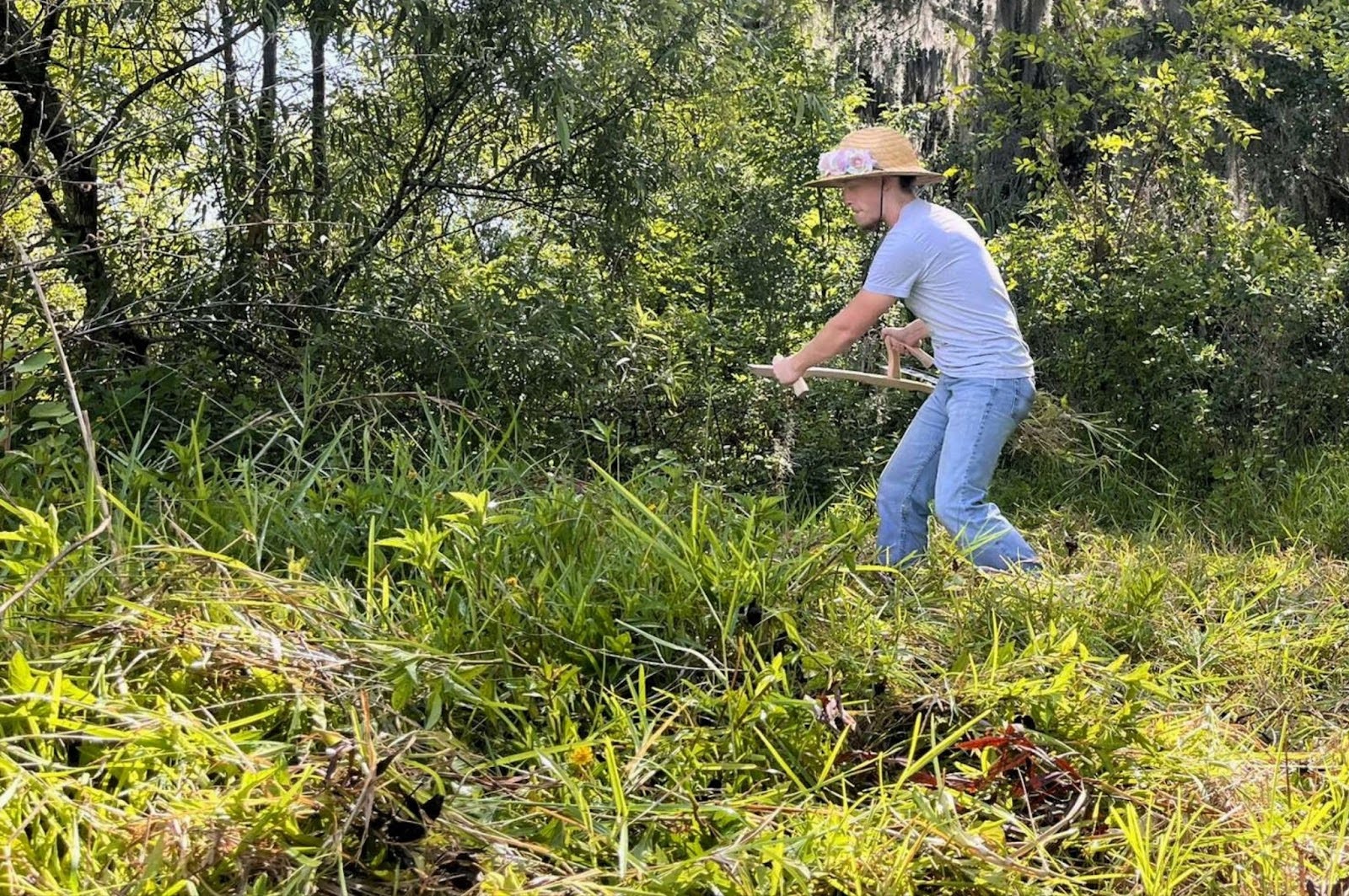
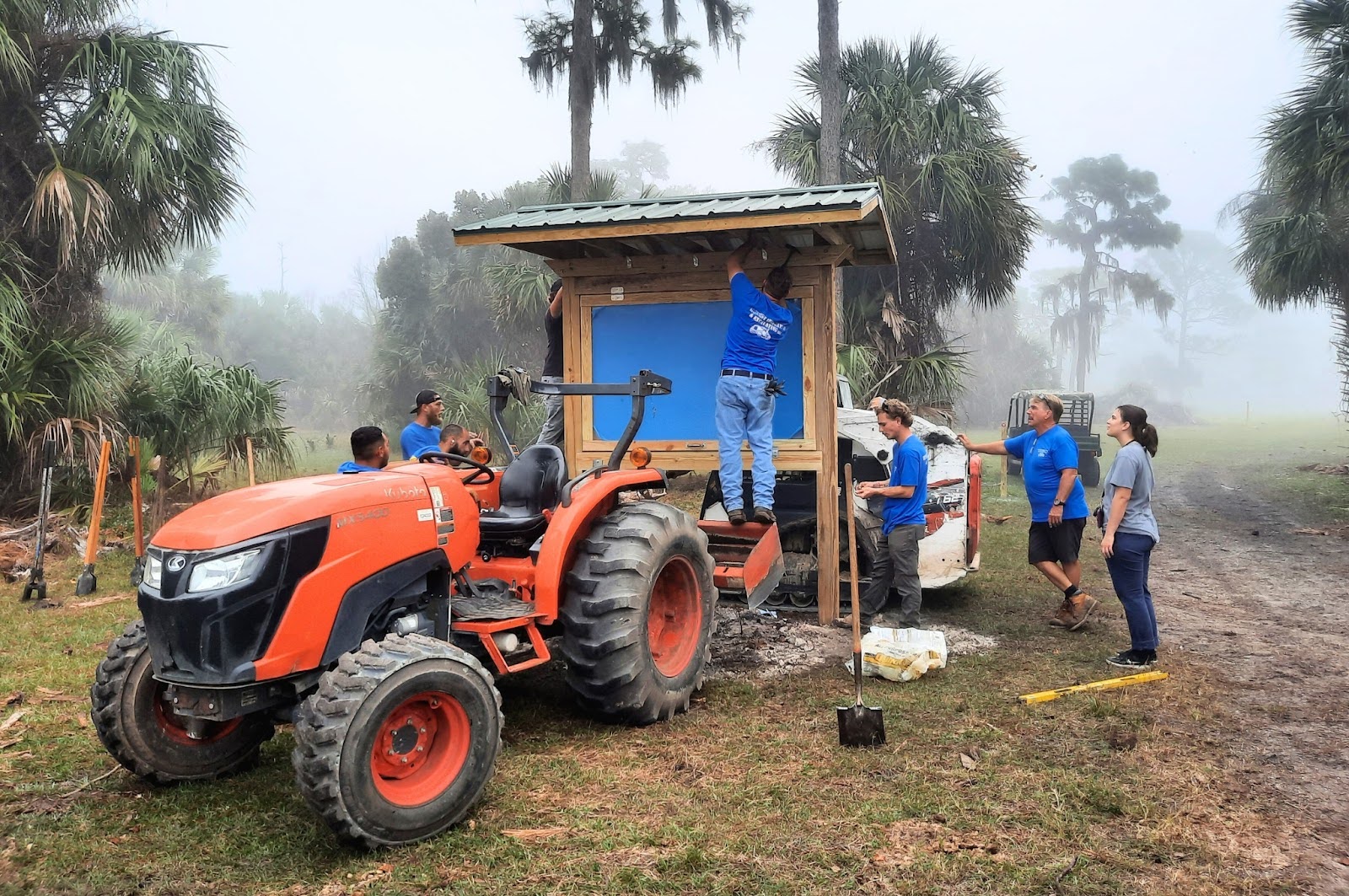
Over the past year, the team has worked across a broad spectrum of environmental initiatives, from invasive species removal to park cleanups. Much of their hands-on work focused on the Sandra Stetson Aquatic Center, home to the Stetson Botanical Gardens. There, they refreshed key garden sections, maintained trails, and led groundskeeping efforts that support both student recreation and environmental education. Another cornerstone of their environmental conservation work was at D Ranch, a former cattle ranch being transformed into a nature trail system. The team blazed 4.7 miles of new trails, installed signage to guide visitors, and placed donated benches and picnic tables, creating a new community resource. In the end, they were able to transform the space to make it accessible and comfortable for community members.
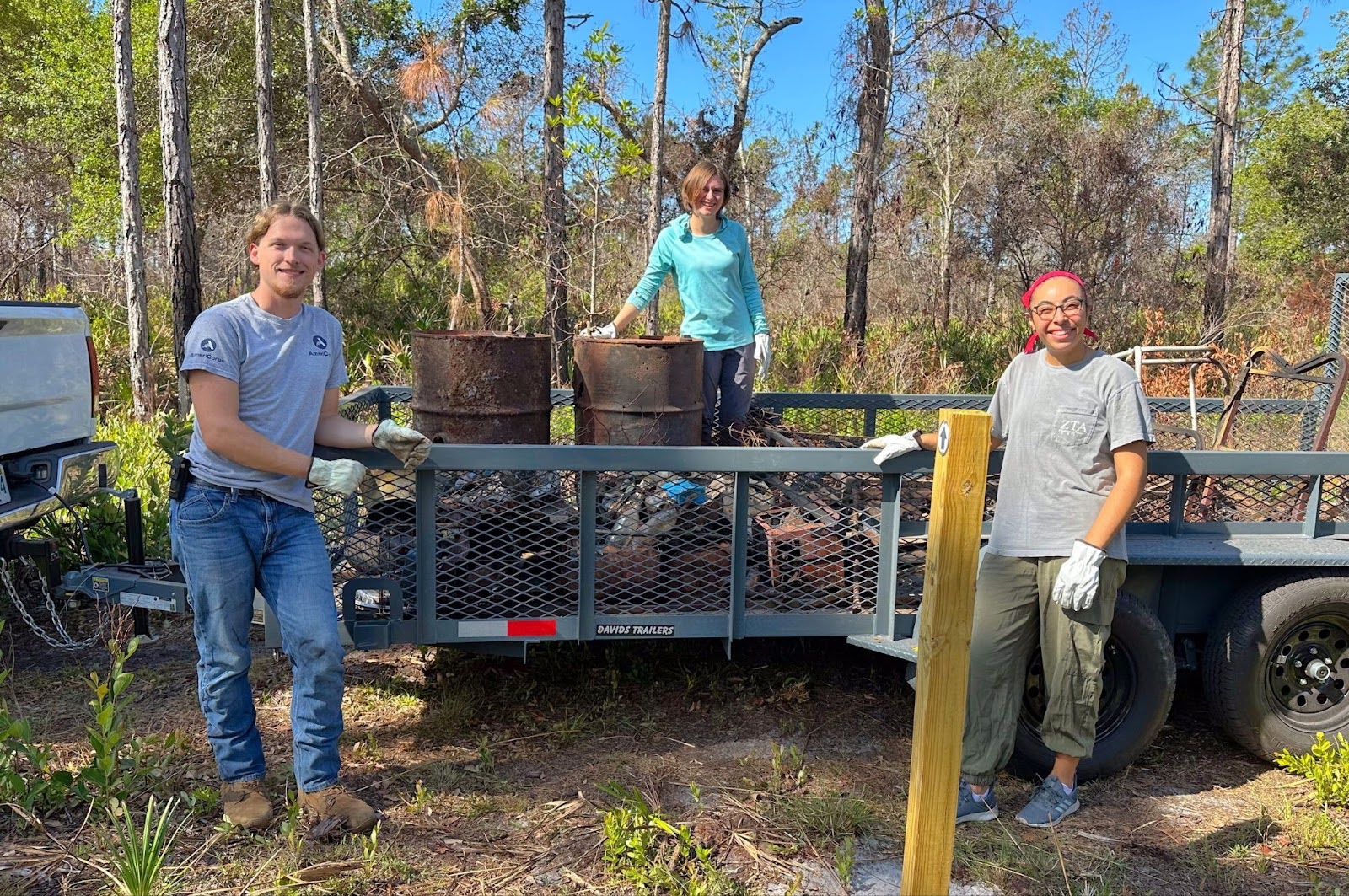
Through their monthly Cleanup Crew events, the team brought environmental stewardship to public parks near campus. They volunteered at Sunflower Park, Painter’s Pond, and the Volusia Sandhill Ecosystem. This increased visibility and awareness of the EnviroCorps program and the members’ work in the community.
One of their most impactful initiatives took place inside people’s homes. The team completed home energy visits with 22 local households, installing energy-saving resources like LED lightbulbs and low-flow showerheads. This provided direct, tangible support for families, often followed by a moment of gratitude and connection.
EnviroCorps members Phoenix and Avery led Hatter’s Closet, a solution to the flood of usable items left behind in campus dorms at the end of each semester. By organizing donation drives and a community sale, the team diverted approximately 600 pounds of waste from landfills and raised $2,577 for the Neighborhood Center, a local organization supporting homelessness prevention. Thanks to Phoenix and Avery’s capacity-building service, the initiative will continue under the leadership of Stetson University’s Student Government.
Throughout their service, the team encountered hurdles: overcommitted students, under-resourced environmental initiatives, and funding strains. However, the team still managed to produce impressive stats: 31 volunteers, 5 miles of trails built, and hundreds of event attendees. Their work also created less quantifiable outcomes: The satisfaction of a resident seeing their utility bills drop. A student who learns what can and can’t be recycled. A biology class planting native flora on a newly restored trail.
To maintain these outcomes, the team has taken strong steps to ensure impact and continuity. Hatter’s Closet will live on through Student Government, and relationships with the Neighborhood Center, the Volusia Sandhill Ecosystem, and D Ranch remain strong. In fact, Brandon has accepted a job offer at D Ranch, where he’ll continue to manage volunteers and trail development. Avery and Phoenix are continuing their environmental journeys beyond Stetson, with Avery working in habitat restoration in South Florida and Phoenix researching urban heat risk in Atlanta. Their service has equipped them with skills, confidence, and a deep understanding of what grassroots sustainability looks like. As they end their EnviroCorps service, their message to campus leaders is clear: support matters—not just in words, but in action. Environmental goals require more than statements. They require funding, institutional buy-in, and systems that empower students to do meaningful, connected work.
As Brandon put it: Community is something that you have to actively build. It’s not always formal. It’s showing up for each other, checking in, and creating culture through connection. That culture is what will sustain the work at Stetson University going forward.