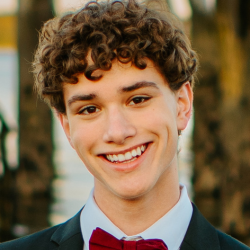
 By Shawn Jiminez
Bowdoin College
The Rural Youth Voices Initiative seeks to empower rural youth to better serve their communities, reshape dominant narratives about rural engagement, and encourage rural-serving organizations to center youth voices. Twelve Fellows from across the United States received $500 and support from Campus Compact to support a narrative change or civic engagement project in their community.
I grew up believing that education was the great equalizer—a space where anyone, regardless of zip code or background, could discover their potential. But as I moved through Maine’s public schools, I began to see a different reality. Some classrooms had the latest technology, while others shared outdated textbooks. Some schools had thriving art and civics programs, while others cut them to balance budgets. The system didn’t fail because people stopped caring. It failed because too many voices were never heard.
For me, advancing educational equity has always been about power. Who gets to decide what students learn, and whose experiences shape how we define “success”? Too often, decisions about education are made without those most affected at the table. When education is treated as something done to communities instead of with them, inequity becomes inevitable.
Finding My “Why”
I first found my calling not in a classroom, but in a school board meeting as a high school student many years ago. I watched as adults debated the importance of diversity in the classroom without a single student voice present. Not once did the adults ask what the students wanted, which ultimately led to the erasure of marginalized perspectives. If the system excludes young people from conversations about their own education, then it’s our responsibility to change the system itself.
Since then, I’ve worked to bridge that gap by helping students prepare testimony, track legislation, and advocate for fairer policies. What I’ve learned along the way is that young people don’t lack insight or motivation. They lack access. They are ready to lead, but leadership requires a belief that their voices matter. When we create structures that allow students to participate meaningfully we unlock the potential of an entire generation.
The Larger Movement
Advancing educational equity expands beyond resources and necessitates recognition. It requires the acknowledgement that lived experiences shape learning outcomes, and that social, racial, and geographic inequities follow students into the classroom. Maine is a state of small towns and long distances, and for many rural students, those distances extend into opportunity itself.
But the movement for justice must also extend beyond geography. It means uplifting LGBTQ+ youth who want safer schools, multilingual learners seeking visibility, and students of color who are too often asked to “represent” entire communities. It means listening when students say the curriculum doesn’t reflect their lives, or when they demand policies that match their realities.
Every student deserves the conditions to thrive, and achieving that requires courage from every corner of the educational landscape. Administrators willing to share decision-making power, teachers committed to culturally responsive classrooms, and policymakers ready to fund equity instead of just talking about it.
What Comes Next
As I look ahead, I’m less interested in reforming education and more focused on re-imagining it. I envision a system where student leadership is built into governance and where schools serve as civic spaces that cultivate empathy as much as intellect.
If you’re reading this, you have a role to play. Attend your local school board meeting. Mentor a student leader. Ask whose voice is missing from the next policy conversation you’re part of, and invite them in. Equity doesn’t emerge from legislation alone. It grows from relationships, dialogue, and shared responsibility.
The classroom is where our democracy begins. If we want a more just society, we must start by building a more just education.