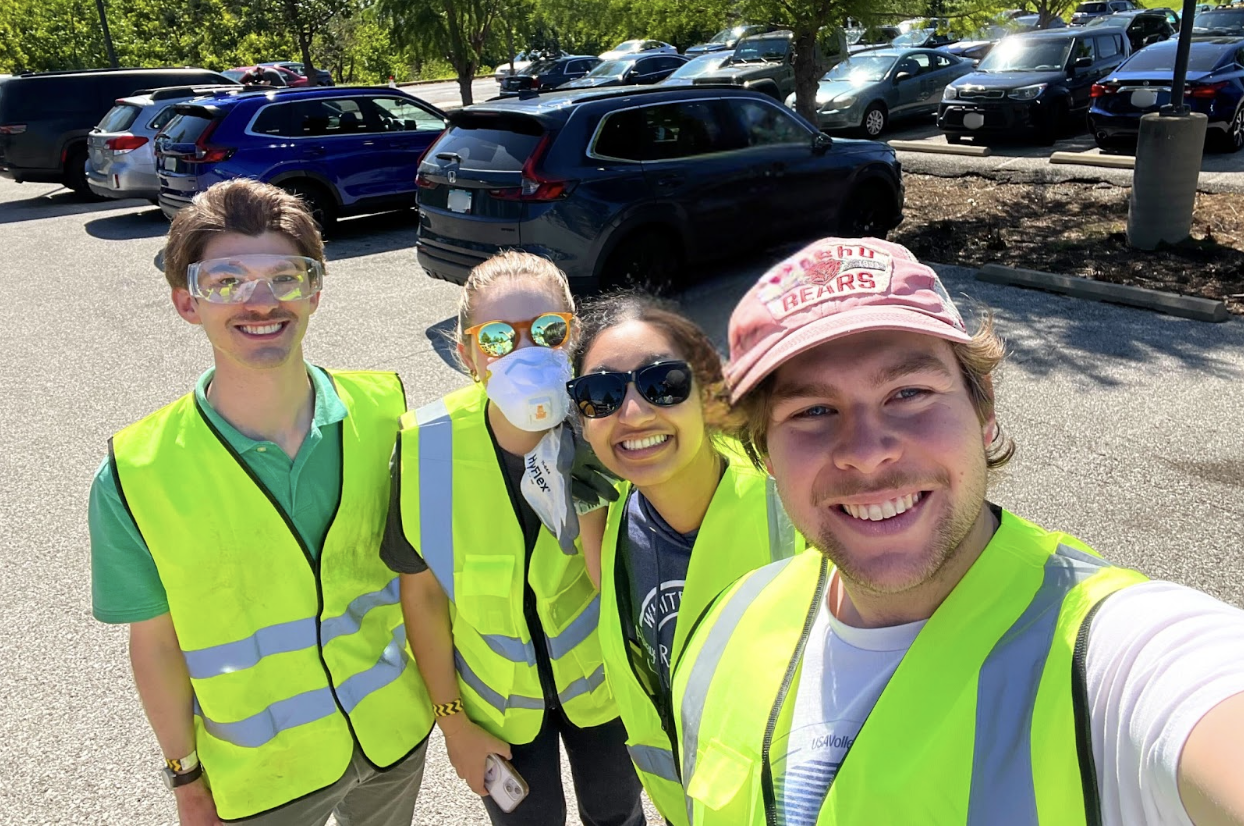
At Washington University in St. Louis (WashU), a dedicated team of AmeriCorps members have spent the past year embedding themselves into the life of the campus and surrounding community, and they’re making a lasting impact. The Campus Compact EnviroCorps (CCEC) AmeriCorps members at WashU, including team leaders Michael, Geena, and Elliot, as well as supportive members Zoe, Erica, Cosmo, Sarah, and Livi, have worked across a range of initiatives that touch nearly every aspect of environmental stewardship.
WashU wanted to focus on three key areas: Nature conservation, material circularity, and energy efficiency projects, each led by Michael, Geena, and Elliot, respectively. Together, they’ve launched programs from the ground up, responded to urgent community needs in the wake of a natural disaster, and cultivated a culture of trust and collaboration that will remain long after their service terms conclude.
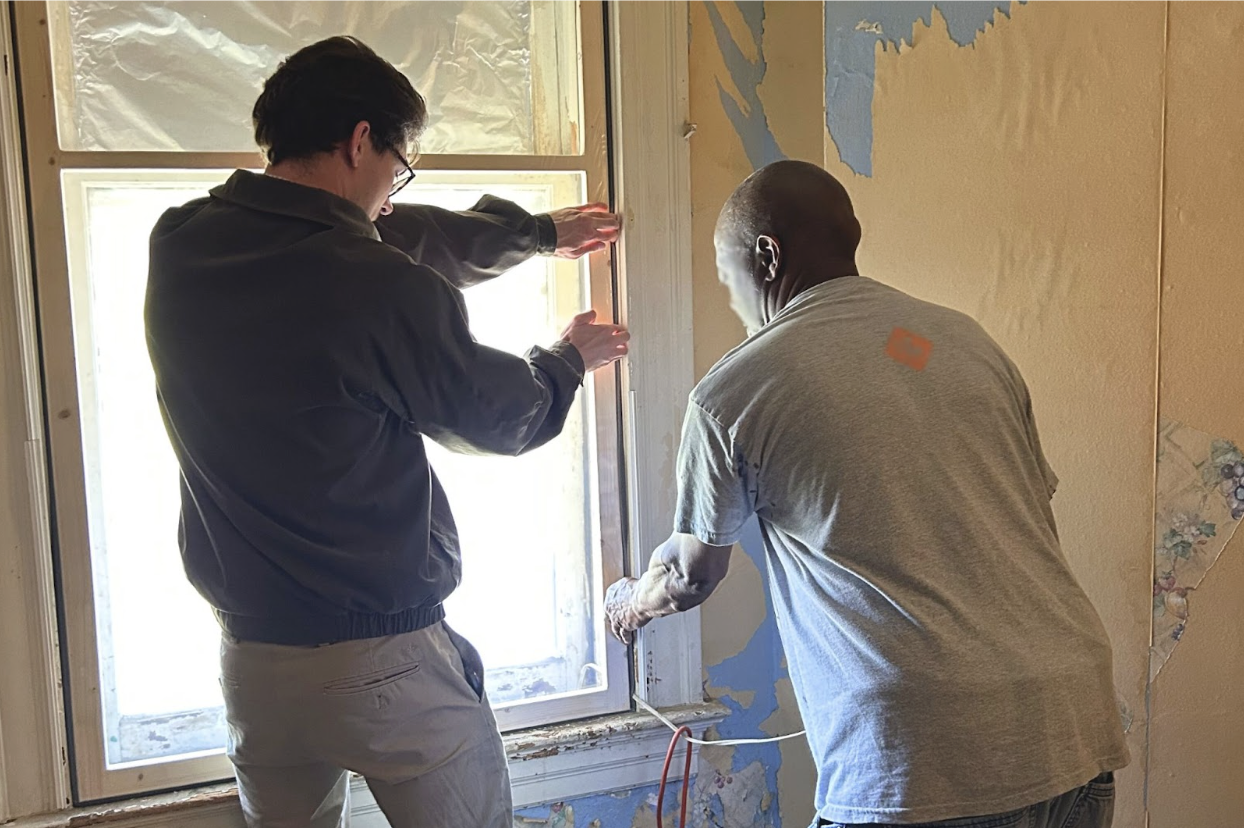
One of the team’s central efforts has focused on energy efficiency, particularly window-insulating inserts. These wood-and-glass inserts provide an additional insulative barrier between window panes and the interior of a space. They are highly effective at keeping heat in during the winter and saving households money. Elliot, working alongside fellow member Sarah, led the development of a residential window insert program designed to serve households in the St. Louis area.
After months of preparation, they successfully installed their first inserts this spring and have begun spreading the word throughout the community. They hosted an event at the university’s School of Medicine where students helped build the inserts. Beyond building and installing these upgrades, they’ve also created tools and educational materials such as an eight-page guide on procurement and storage to ensure the knowledge lives on beyond their service terms. For Elliot, success is measured not just in houses served, but in the trust they’ve built with residents and the gratitude expressed by families who feel supported by their community in their own homes.
Michael enhanced WashU’s arboretum and natural spaces. Over the course of the year, he expanded programming dramatically, offering educational opportunities for students, facilitating tree plantings, and helping lead community-focused events in response to storm damage. Following a destructive tornado this spring, Michael worked to reopen public parks by clearing debris and restoring trees, which directly enabled those spaces to welcome the public once again. He has also partnered with local organizations, such as Forest ReLeaf, to support ongoing nature conservation efforts, including hosting tree planting events in the community. His ultimate goal has been to create an experience within the arboretum that inspires learning, reflection, and a deeper connection to nature, while also helping underserved communities gain access to green space and environmental support.
This summer, Michael and Livi are working together on a street tree inventory for Forest ReLeaf's street trees in St. Louis, developing and refining web content for the WashU Arboretum website, measuring the extent of storm damage to public parks in the city, and leading activities for school groups visiting WashU.
Geena has been at the forefront of WashU’s push toward material circularity. She leads the Circularity Center, a reuse program that collects and redistributes goods from students and staff through the “Share Our Stuff” initiative. Over the past year, the program has expanded to include donation stations in every dorm, off-campus pickups, and partnerships with moving companies to collect larger items. Items are then distributed according to the highest need, or they are given to nonprofits in the community. Geena also helped send over 2,000 pounds of goods, including blankets and canned foods, to assist in tornado relief efforts. Geena is creating a redistribution system that aligns with environmental conservation goals of directly supporting students in need and diverting waste from landfills.
And the program continues to grow: The team observed a 59% increase in sales attendance at the Circularity Center between the fall and spring semesters, evidence that the Center is growing into a trusted campus resource.
A key part of the Circularity Center’s growth was shaped by Cosmo, a part-time member whose service recently ended in June. Cosmo was instrumental in orienting Geena to the Center’s operations, supporting everything from volunteer management to sorting and sales. They also co-led Sustainable Fashion Week at WashU, bringing together students, faculty, and offices from multiple schools to create a week-long series of events that promoted thoughtful consumption.
Cosmo’s passion and ability to bring people together helped turn the Circularity Center into a collaborative and creative space. Though his AmeriCorps term has ended, they are spending the summer as a camp counselor in Illinois and plans to return for another year of service in the fall.
The tornado that struck St. Louis on May 16, 2025 was a key pivot point for the team. In the wake of the storm, each member paused their ongoing projects to contribute directly to relief efforts. Elliot spent time at the YMCA, which had become a hub for support, while Geena volunteered with Home Sweet Home, a local furniture bank, helping pack and distribute hygiene products, canned goods, and other critical supplies.
Michael not only helped coordinate tree restoration and community rebuilding events, but personally attended an evening relief event to ensure residents knew their needs were being heard. For Elliot, the experience was one of the most meaningful parts of the year because of the way each member showed up with purpose and heart, ready to serve their community.
This capacity to adapt and persevere has defined the team’s story. From building capacity for their host site to program design, they had to figure out systems and expectations. In doing so, they’ve built a foundation for future members. For Michael, what stands out is the unwavering commitment of the group to showing up and serving meaningfully. Elliot reflected on how each person has faced personal and technical challenges, from learning woodworking and HVAC systems to coordinating across different departments, yet everyone continued to show up. And as Geena emphasized, it’s clear now that the team has blossomed through shared experiences and growing trust.
When it comes to measuring impact, the team looks beyond traditional metrics. Elliot and Sarah have supported about 20 households through their energy work, but for them, it’s the sense of connection and appreciation from residents that defines success. Michael has managed around 75 volunteers across 5 major events and he has also more than tripled the number of programs hosted at the campus arboretum. He sees success in the consistency of his presence and the growing culture of engagement he’s cultivated.
The Circularity Center has become a dependable node for donation and redistribution on campus, and Geena credits its success to the way it now serves as a trusted touchpoint for the WashU community.
Looking ahead, each member sees opportunities for growth and expansion. Michael envisions building out the arboretum program further, with more AmeriCorps support and broader reach. Elliot believes a cultural shift is needed: one that sees service work as valuable and impactful, even without an advanced degree. Geena hopes to expand circularity education and outreach in the St. Louis area, helping the broader community reimagine consumption and waste. Zoe and Erica, both excited by cross-program collaboration, see future events and projects that tie environmental stewardship efforts more tightly together. Erica looks forward to diving deeper into waste reduction initiatives this summer.
The team has built momentum for environmental stewardship projects at WashU that will continue well into the future. Their efforts demonstrate what’s possible when service is embraced as an opportunity for care, innovation, and adaptability. They’ve planted ideas, restored communities, and created systems that others can build upon. For the WashU team, service doesn’t just fill a gap. It grows something lasting.
“As a cohort experience, this program provides EnviroCorps members a broad view of what environmental stewardship looks like. Each member has expertise and passion in their focus area, and they are sharing that knowledge with one another and learning how these systems intersect. The more they learn, the more they are able to make a difference in the community. We’ve seen a significant capacity jump to support efforts on campus and with our community partners.”
—Phil Valko, Assistant Vice Chancellor for Sustainability at Washington University in St. Louis