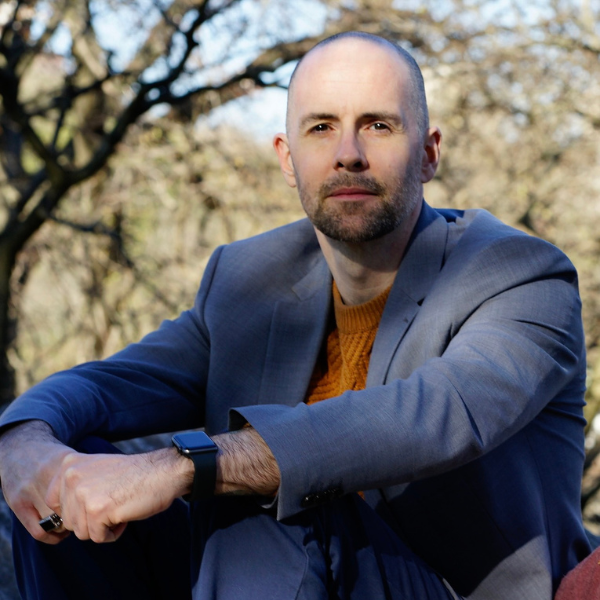
 Jason Michael Leggett is an Associate Professor in the Behavioral Sciences Department at Kingsborough Community College in Brooklyn, NY. He teaches Constitutional Law, the U.S. Judiciary, and Environmental Law and Politics. His work focuses on rights consciousness among marginalized communities. He is most interested in how these individuals think about legality in everyday practice against injustice. He draws upon experience in political organizing and community activism to co-create educational opportunities that provide alternative visions of the future toward more equitable social relations.
In times like these, I draw upon music to awake my soul, something Community College Fellow Lena Jones and I learned we share in common through our work with Campus Compact. Not long after the 2024 Community College Institute and the formal Fellowship ended, I heard rumors that our Provost was leaving for another college. I braced for the next set of administrative turnovers, our sixth iteration in my fifteen years at the college. At present, there are several interim leaders at our institution, and I wondered whether each would be hesitant to step into a role that might shake things up or rattle the status quo. I shared my institutional ethnography on the collective action obstacles and equity detours with a group of equity-minded faculty, staff, and our interim Provost.
At best, it provides a roadmap for what we need to do to brace for a very uncertain 2025. At worst, it will be ignored, and we will continue down the path toward disillusionment, diffidence, and distrust. As of yet, I have not heard from anyone who would like to use it, nor discuss the themes described, and so my heart is heavy and my soul yearns for connection. How might we maintain under such deplorable conditions?
Elizabeth Minnich, in "The Evil of Banality," argues that extensive evil (systematic harm like genocide or exploitation) isn't solely perpetrated by monstrous individuals. Instead, it relies on the "banality of evil," where ordinary people become complicit through thoughtlessness, conformity, and prioritizing self-interest to counter this, and engender an extensive network of good, Minnich suggests we need to cultivate the opposite of banality: engaged, critical thinking and a commitment to moral action. Here's how, drawing from her work:
1. Cultivate Critical Thinking:
- Question assumptions: Challenge "common sense" and received wisdom. Ask "why" and "how" things are the way they are.
- Seek diverse perspectives: Break out of echo chambers. Actively engage with viewpoints different from your own.
- Connect the dots: Look for patterns and connections between seemingly isolated events. Understand how systems operate.
- Think systemically: Don't just focus on individual actions, but analyze the larger structures that enable harm.
2. Foster Moral Courage:
- Resist conformity: Don't be afraid to speak up against injustice, even when it's uncomfortable or unpopular.
- Develop empathy: Cultivate understanding and compassion for others, especially those who are different from you.
- Take responsibility: Recognize your own role in upholding or challenging systems of oppression.
- Act with integrity: Align your actions with your values, even when it's difficult.
3. Build Connections and Community:
- Engage in dialogue: Create spaces for open and honest conversations about difficult issues.
- Find common ground: Seek areas of shared concern and build alliances across differences.
- Support collective action: Join with others to challenge injustice and create positive change.
By fostering critical thinking, moral courage, and community, we can create a network of resistance to the "banality of evil." This involves actively questioning the status quo, taking responsibility for our actions, and working together to build a more just and equitable world.
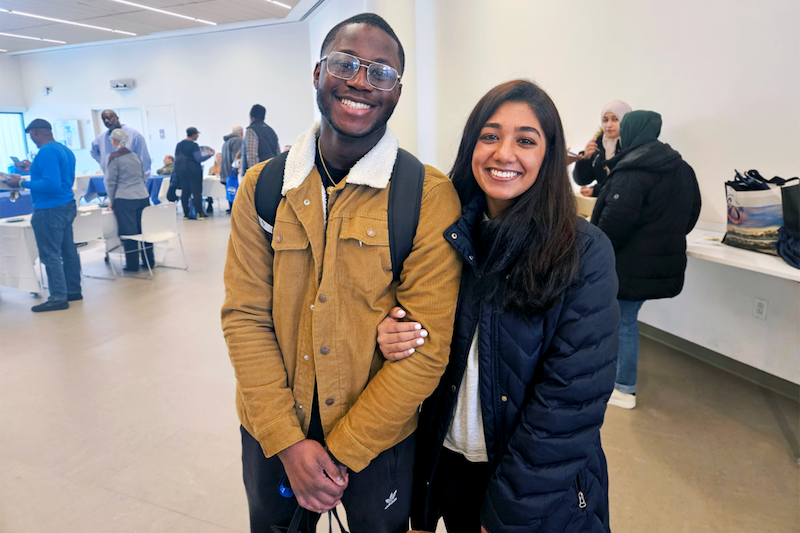 Our network is strong, resilient, and crosses states and even nations. Through Campus Compact, we have an impressive set of practical tools that include voices from across the political, racial, religious, gender & sexuality, cognitive, economic class, and experiential spectrum. I am currently using resources developed by Bernice Rosas Belmonte to help a group of students, alumni, community partners, and Kingsborough faculty and staff to use place-based approaches to foster mental health and well-being for our immigrant students this coming spring. We are also proud to support Maria Perez, a 2024-2025 Newman Civic Fellow, as she aims to bridge the gap between teachers and parents regarding mental health & disability awareness. We are proud that Dr. Joanna Maulbeck, a junior faculty member in the Kingsborough Education Department, is mentoring Maria as she transfers to Brooklyn College.
Through the American Association of Colleges & Universities (AAC&U), in collaboration with Campus Compact, I am part of an exciting non-partisan project aimed at developing inventory tools and case studies & profiles to serve as a foundation for a long-term planning project intended to transform how higher education organizes itself to scale and streamline the most effective forms of democracy-building work. We supported Civic Teaching Fellows - Dr. Christina Colon and Dr. Dmitry Brogun - over the last year to develop and share their work on citizen science, at a recent AAC&U STEM conference. These examples show that democratic pluralism can be integrated into science courses to foster career exploration and preparation.
The City University of New York (CUNY) and State University of New York (SUNY) have partnered up to host the first Public Good U, to Imagine an institution that meets the ideals of public higher education, in February. Dr. Nicola Blake (CUNY Central Fellow), Dr. Marcus Allen (Guttman Community College CUNY), Helen-Margaret Nasser (Kingsborough Student Union & Intercultural Center), and I are presenting based on our collaboration on the Civic Learning & Democratic Engagement Coalition and the Multi-state Collaborative for College Civic Learning and Democracy Engagement (the “MSC”) which promotes robust state-level policies and programs to foster college civic learning for an engaged democracy in both two- and four-year institutions, across the United States as well as U.S. territories and the District of Columbia. Members of the Coalition recently wrote, that to make practical problem solving part of the college curriculum, “educators need to expand that dialogue so that it encompasses tomorrow’s democracy,” something central to suggestions from a recent Complete College America report.
In my own discipline of Law and Society, I have connected with transformative educators and scholars for the public good in Canada, England, and South Africa. I will be presenting this work in May at the Annual Meeting and writing about this form of scholarly activism in upcoming disciplinary journal publications. Earlier this year, in a research article arguing for a bottom-up pluralist interpretation of constitutionalism, I provided examples of both the challenges and the transformations that marginalized students encounter as they wrestle with the gap between democratic ideals and their lived experiences of injustice.
To address institutional transformation, I am co-writing a chapter with colleagues from Ottawa, Canada, and Cleveland, Ohio, on sustainable partnerships and equitable assessments. My Interim Provost, Dr. Sharon Warren Cook, my colleague, Helen-Margaret Nasser, and I also detail a culturally sustainable approach to the mental health crisis in the Teachers College Record, a theme AAC&U President Lynn Pasquerela also raised in an issue of Liberal Education this past summer.
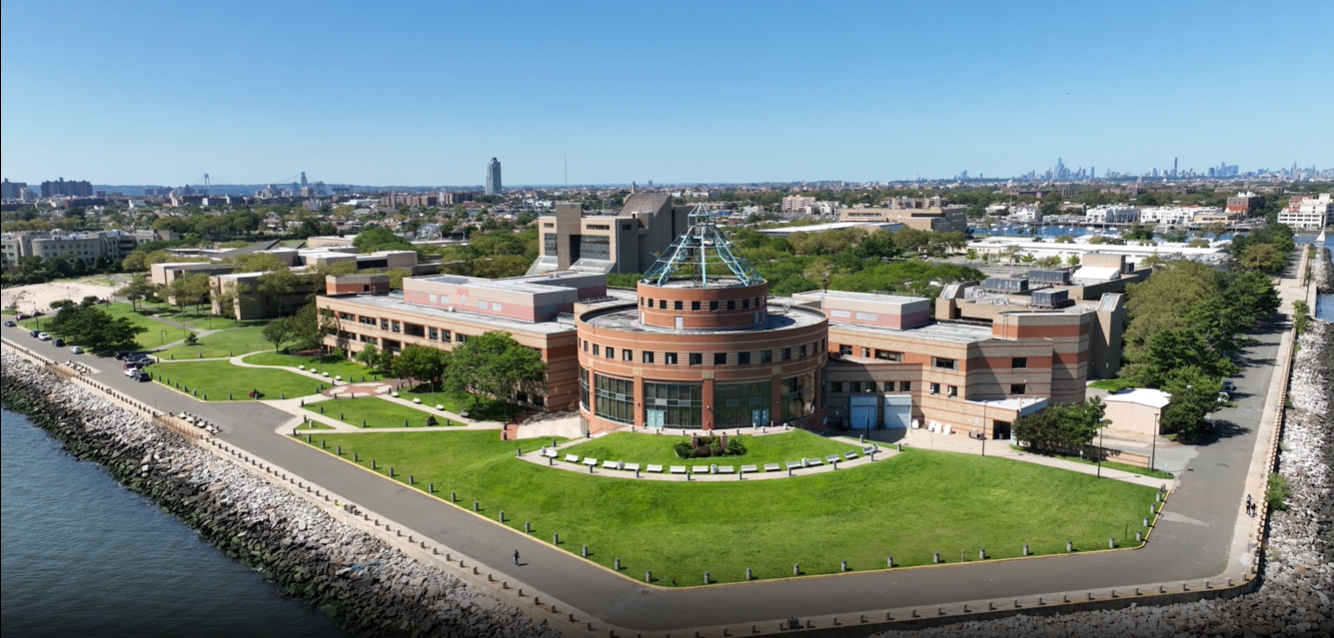 At my campus, Kingsborough Community College, in politically divided South Brooklyn, we are working across differences and coming out of silos to address mental health among immigrants in 2025, a platform that will help all students, and create a sense of belonging, at a time when some are being told they are not welcome. Through research grants and collectives, we are engaging students in Undergraduate Research through interdisciplinary methods, proven high-impact practices, particularly for marginalized learners and for equitable transformative change.
I have also been working toward a Master’s Degree at the CUNY Graduate Center, a place where educating for the public good is explicit in its mission, in Liberal Studies with a concentration in Public Scholarship. I have found collaboration, inspiration, and the hallmarks of a liberal education for democratic equity throughout this experience. For example, the Graduate Center just recognized the contributions of Rob Robinson, who was nominated for an Honorary Degree, as a global housing justice and human rights advocate, whom we worked with on a project called UnhomelessNYC.
Through our commitments to Civic Learning Democratic Engagement, Interfaith and Intercultural dialogue, and by keeping our expectations of students high, with structured support, our classrooms have been able to be laboratories of democracy and vision creators of a more equitable future. My colleague, Helen-Margaret Nasser, and I, were recognized for this work and recently informed we were accepted into InterFaith America’s Civic Pluralism Development Grants. We are excited about this opportunity to learn from others across the country.
Life after fellowship can sometimes seem as if tilting at windmills, as Fellow Matthew Oakes shared at Campus Compact 24: sometimes it feels as if we are the only ones crazy enough to do this work on our campuses. At this moment, it is particularly true, and my own feelings of isolation are as strong as ever; but at these times, I also think back to the catalyst of our Community College Fellowship and how it gave me a boost of inspiration- that although only five of us- we were there for and with each other, to let us each know we weren’t crazy, or if we were, that’s okay too. I still recall Matthew’s persistent optimism and positive energy as we discussed our challenges and hopes for the future. I offer these examples, among many more not mentioned, as evidence that we cannot do this work alone; Lena Jones continues to be right with her prescient metaphor - we are still in a dust storm. In closing, I argue WE need to stay in fellowship in the world until the storm passes over.


Get Involved
Sign up for email updates below or follow us on social media to read more stories of impact on Campus Compact's community college member campuses. Or consider joining our community college affinity group, a network dedicated to preparing community college students to be informed, active, and mobilized leaders in our democracy.