Published in March of 2017, "The Community Engagement Professional in Higher Education: A Competency Model for An Emerging Field", offered by “practitioner-scholars,” was the first to provide a path to professionalization of our field. This seminal work was an exploration and identification of the knowledge, skills, and dispositions that are central to supporting effective community engagement practices between higher education and communities. The field has evolved since then and It is time to update this model for Community Engagement Professionals, and to do so in a rigorous, field-tested way
The original author, Lina Dostilio, along with her colleagues Justin Dandoy and Jamilah Ducar, embarked on a new study to be released in Spring 2026. This resulting book will address the relevancy of the 2017 framework in current Community Engagement Professional practice. This new model will address sunsetting competencies which are no longer applicable within the context of the field, emphasizing new competencies that are considered core to the work of CEPs, and including competencies within new and emerging functional areas of CEP professional practice.
This research, conducted as part of Campus Compact’s Project on the Community Engagement Professional, seeks to identify the shared knowledge and practices of Community Engagement Professionals by looking to empirical practice literature. The authors trace the evolution of engagement administration over time and the role of those facilitating community-campus engagement toward a “Second Generation” professional who is at once a “tempered radical, transformational leader, and social entrepreneur.”
Additional work to understand and empower Community Engagement Professionals in their role as distinct from other higher education professional types will enable both broader impact for institutions and communities now with a view to prepare those coming to the role for a dynamic and demanding environment without distinct boundaries
For questions or to learn more about this update, please contact Nicole Springer, Vice President, Professional Development & Inclusive Excellence at Campus Compact
Meet the team behind "The Community Engagement Professional in Higher Education: A Competency Model for an Emerging Field"
Jodi Benenson
 Jodi Benenson is an associate professor in the Department of Organizational Leadership, Policy, and Development in the College of Education and Human Development at the University of Minnesota. Her research focuses on civic engagement, equity, and evaluation in nonprofit and public contexts. Using multiple methodologies, she grounds her work in theories that reflect her interdisciplinary training in civic engagement, public policy, and management, and fosters links between research and practice through community engaged scholarship.
Previously, Benenson served as an associate professor at the University of Nebraska Omaha, where she chaired the Master of Public Administration (MPA) program in the School of Public Administration, served as the academic director for the U.S. Department of State's Young Southeast Asian Leaders Initiative (YSEALI) Institute on Civic Engagement, and served as a service-learning faculty fellow for the College of Public Affairs and Community Service. She also served as the Fulbright Canada Research Chair in Governance and Public Administration at the University of Ottawa and as a postdoctoral scholar at the Jonathan M. Tisch College of Civic Life at Tufts University. She received a B.S. and MPA from Indiana University and an M.A. and Ph.D. in social policy from the Heller School for Social Policy and Management at Brandeis University.
Liz Brandt
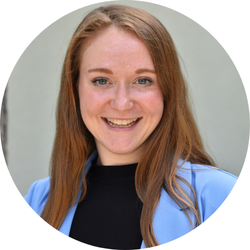 As Director of Community Engagement at the Bonner Foundation, Liz supports a national network of 75 colleges and universities including teams of administrators, students, faculty, and leadership. Through planning of national conferences, resource and curriculum development, leading strategic planning and visioning, cultivating and managing strategic partnerships with graduate schools, facilitating learning cohorts and communities, supporting grant-making, and identifying and sharing best practices and models, she works to enhance civic and community engagement initiatives and strategies on campuses. She earned her bachelor’s degree in Anthropology and Sociology at Centre College where she was a Bonner Scholar. Liz earned her master’s degree in Higher Education with concentrations in Administration & Leadership and Educational Policy from Drexel University. Her thesis is published in the Journal of Higher Education Outreach and Engagement (2022) where she studied the barriers and pathways for Community Engagement Professionals (CEPs) to thrive in higher education. She was selected as a 2022-2023 Engaged Scholar with Campus Compact and is currently serving as a Student-Centered Engagement Research Fellow for the Community Engagement Professional Competency research project with Campus Compact. Liz’s areas of expertise include community engagement strategy and leadership, program development and management, higher education, student development and leadership, capacity building, and professional development.
Kristi Carpenter
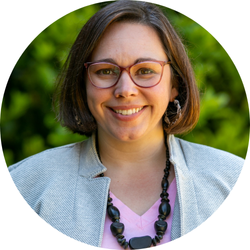 As a fellow, Kristi will bring the expertise she has gained through her work with Georgia’s Cooperative Extension and her leadership in the National Association of Extension Program and Staff Development Professionals to the broader Campus Compact network. She will contribute to advancing Campus Compact’s efforts to recognize and elevate the role of Cooperative Extension Community Engagement Professionals (CECEPs).
Kristi’s work will focus on developing field-informed knowledge and practical resources that amplify the intentional role of CECEPs, showcase innovative practices, and inspire greater engagement within Cooperative Extension. She will collaborate with co-author Marina Denny, Campus Compact staff, and the team of fellows updating the Competency Framework for Community Engagement Professionals to ensure that all related activities and tools are practical, applicable, and grounded in the needs of member campuses and their communities.
“For over a century, Cooperative Extension has been the bridge between public land-grant universities and the communities they serve—connecting people with research-based knowledge to solve local real-world challenges. At its core, community engagement is what empowers us to work side by side with individuals, families, and farmers to build stronger, safer, and healthier communities.
Sean Crossland
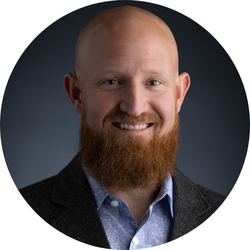 Sean Crossland is an Assistant Professor and Program Director the Higher Education Leadership M.Ed. at Utah Valley University. He is also the Academic Service Learning Director for the University. Sean will be updating the Community Partnerships functional area.
Justin Dandoy
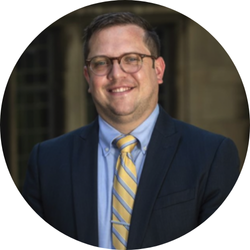 Dr. Justin Dandoy serves as the Director of Community Affairs at the University of Pittsburgh, joining the Engagement & Community Affairs team in 2022, and is responsible for leading University efforts and interactions with key neighborhood constituencies, monitoring and addressing community concerns in neighborhoods adjacent to campus and strengthening communications vehicles for community-facing work.
Justin is a graduate of the University of Pittsburgh Doctor of Education program in Higher Education Management, where his scholarly work focused on the professional competencies of higher education place-based community engagement professionals. Justin received a Bachelor of Arts degree in Political Science from Clarion University and a Master of Arts degree in Student Affairs in Higher Education from Slippery Rock University.
Marina Denny
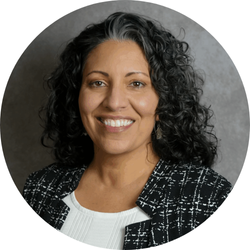 As a fellow, Marina will draw on her extensive background in land-grant university Extension systems and her current role as Associate Vice Provost for Engagement at Oregon State University to advance Campus Compact’s efforts to recognize and elevate the role of Cooperative Extension Community Engagement Professionals (CECEPs).
Marina’s work, in collaboration with co-author Kristi Carpenter, will focus on highlighting the functional competencies of CECEPs across a diverse range of U.S. Extension systems. She will work alongside Campus Compact staff and the team of fellows updating the Competency Framework for Community Engagement Professionals, in the hopes of amplifying Extension’s place in the higher education engagement landscape and highlighting the impact of land-grant universities beyond campus boundaries.
“At its heart, community engagement connects academic inquiry with the lived experiences of communities, empowering us to co-create solutions that address pressing challenges. This speaks directly to both Cooperative Extension and the land-grant university mission.
Lucas Diaz
 Dr. Lucas Díaz is the assistant director for research, evaluation and curriculum at the Tulane Center for Public Service and is an adjunct faculty in the department of Sociology. Lucas is a Dominican-born immigrant to the United States who has lived in the New Orleans area since the 1970s. He completed his PhD in Sociology from Tulane University’s City, Culture, and Community program in 2022 after working 20 years in the local non-profit and government sector. Since 2000, Lucas has worked in non-profit management, community engagement and organizing, government-based public participation programs and policies, leadership development, and non-profit fundraising. He co-founded and led a New Orleans based community non-profit organization serving the Latinx community in 2007, then served as the first director of the Mayor's Neighborhood Engagement Office for the City of New Orleans from 2011 to 2013. Lucas published The Know-How of Public Leaders in Collective Politics in July 2024 with Emerald Publishing, which explores the interaction between what public leaders know about change work and how this knowing interacts with desired outcomes in collective politics.
Lina Dostilio
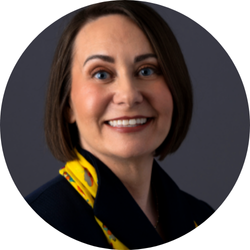 Lina Dostilio serves as the Vice Chancellor for External Relations at the University of Pittsburgh, where she acts as deputy and strategic advisor to the Senior Vice Chancellor. In this role, she ensures alignment and cohesion across the University’s outward-facing functions, including Philanthropy and Alumni Engagement, Governmental Relations, Communications, and Engagement and Community Affairs. She also leads efforts that bring together community engagement, economic development, and storytelling to elevate the University’s public impact.
Dr. Dostilio has more than 20 years of experience in higher education and has worked across institutional strategy, academic leadership, and co-curricular domains. She has cultivated strategic partnerships across sectors and within institutions to expand universities’ public reach and relevance. Her research explores the professionalization of community engagement professionals, how universities respond to societal challenges, and cross-sector partnerships.
She currently serves as Vice Chair of the Commission on Economic and Community Engagement for APLU and Co-Chair of the national Chief Engagement Officers Forum. She has also held fellowship roles with Campus Compact and the Coalition of Urban and Metropolitan Universities and is on the advisory board of Advancing Research Impacts in Society (ARIS). Locally, Lina is on the board of directors of Family House and serves as Pitt’s United Way Campaign chairperson.
Dr. Dostilio earned her Doctor of Education in Educational Leadership from Duquesne University. She also holds a Bachelor of Arts in Sociology from The Pennsylvania State University and certificates in qualitative research methods and human-centered design.
Jamilah Ducar
 Jamilah Ducar is the Associate Vice Chancellor for Engagement and Community Affairs at the University of Pittsburgh, where she leads a team focused on relationships — helping Pitt and its neighbors work side by side in ways that are welcoming, clear, and built to last. She supports broad community affairs connection and response; place-based partnerships; learning across the lifespan through the Osher Lifelong Learning Institute and the Gismondi Neighborhood Education Program; and strategic support for community-engaged scholarship across the University.
Dr. Ducar holds an Ed.D. in Urban Education from the University of Pittsburgh, a Master of Public Management from Carnegie Mellon University's Heinz College, and a Bachelor of Science from Duquesne University. She is a certified practitioner in Human-Centered Design through the Luma Institute and became the first person in the United States to earn the full Community Engagement Professional Credential through Campus Compact. She served as project lead and co-chair for the University of Pittsburgh's successful reclassification for the 2026 Carnegie Elective Classification in Community Engagement. She also serves as Vice Chair of the Allegheny Regional Asset District, Vice Chair of the Steel Valley Accelerator, and Chair of the Oakland Task Force.
Romy Hübler
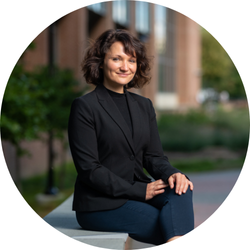 Romy Hübler is Director of Civic Engagement and Social Responsibility at Towson University (TU). Romy has fifteen years of experience researching, teaching and working in civic learning and community engagement fields. In her role at TU, she supports students, staff, and faculty in developing the dispositions, skills, and knowledge needed to create thriving communities in which members are active co-creators of a shared future. In addition to being a Campus Compact Research Fellow, Romy is a member of the American Democracy Project Steering Committee and the Imagining America (IA) National Advisory Board. She is also a project leader of the B-More with Imagination Collaboratory. Her publications include Together Beyond: Fostering Agency and Connection within Campus Communities, Talking Democracy, and Faculty Reflections at the Intersection of Digital Storytelling and Community Engagement. Prior to TU, Romy worked at the University of Maryland Baltimore County (UMBC) as Coordinator for Student Organizations and Involvement in the Office of Student Life and Associate Director of the Center for Democracy and Civic Life. She was also an Honors College Faculty Fellow teaching courses about democracy, dialogue, and institutional change. Romy earned her Ph.D. in Language, Literacy, and Culture, M.A. in Intercultural Communication, and B.A. in Modern Languages and Linguistic at UMBC.
Emily Janke
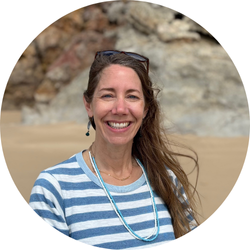 Emily Janke, Ph.D. brings to the book project on community engagement professional competencies her experience as a scholar-administrator who supports and studies individual and institutional community engagement. In deep collaboration with Jamie Ducar, she explores the core competencies that are required across professional roles and functional areas. What are the qualities and characteristics required of community engagement professionals that make their approach and skillset distinct from others? Emily serves as the director of the Institute for Community & Economic Engagement, and as professor of Peace and Conflict Studies at the University of North Carolina at Greensboro. Her scholarship examines reciprocal community engagement partnerships, faculty rewards and culture, institutional capacity and support for community-engaged scholarship, tracking and measuring institutional engagement activities, outputs, and outcomes, and communication and conflict transformation for partnership development.
Paul Kuttner
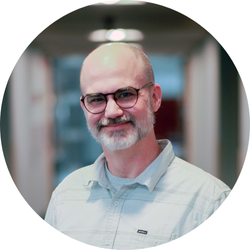 Paul Kuttner is the Director of Education Partnerships at the University of Massachusetts Lowell. Prior to this, Paul served as Director of Partnerships for the nonprofit Community-Campus Partnerships for Health and Associate Director for University Neighborhood Partners at the University of Utah. Paul is an engaged scholar whose work focuses on relationships between communities and educational institutions across the K-12 and higher ed spectrum. Paul was named the 2023 Coalition of Urban and Metropolitan Universities / Collaboratory Research Fellow for his work on evaluating the impact of community-campus partnerships. Paul earned his master’s and doctorate from the Harvard Graduate School of Education and lives in Malden, MA with his spouse and son. His podcast, Partnership Work: The Art and Science of Bringing People Together can be found at https://partnershipwork.org.
Laura Martin
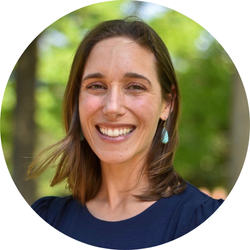 Laura Martin serves as Director of M Partner and Associate Director of the Grisham-McLean Institute for Public Service and Community Engagement, a center at the University of Mississippi that fights poverty through education, innovation, and entrepreneurship. Laura engages faculty, staff, students, and community partners in mutually beneficial efforts to improve quality of life in Mississippi. She directs M Partner, a university-wide community engagement initiative that aligns community priorities with university resources, and guides implementation of community engagement initiatives to promote innovation and entrepreneurship and to strengthen the capacity of nonprofit organizations working to fight poverty in Mississippi.
Greg Mellas
 Greg Mellas, Ph.D. is a seasoned higher education leader with over two decades of experience in academic administration, community engagement, and experiential learning. He currently serves as the Dean of Liberal and Fine Arts at Saint Paul College, where he oversees 80 faculty across 20 disciplines, guiding academic innovation, faculty recruitment and retention, and strategic partnerships. Previously, Greg held leadership roles at Metropolitan State University, including Director of the Institute for Community Engagement and Scholarship and chief community engagement officer, where he advanced institutional engagement strategies and secured national recognition and funding. His career also includes pivotal roles at Minneapolis Community and Technical College, where he co-founded a center for civic engagement, led service-learning programs, and taught Spanish.
Greg holds a Ph.D. in Higher Education Policy and Administration from the University of Minnesota, with a research focus on senior outreach and engagement leadership. A former Peace Corps volunteer in Paraguay, he brings a global perspective and a deep commitment to equity, student success, and community collaboration.
Beth Merenstein
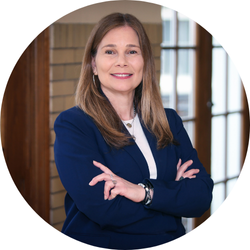 Dr. Beth Merenstein is currently serving as the Associate Vice President for Community Engagement and Experiential Learning and Executive Director of the Center for Community Engagement and Social Research (CCESR) at Central Connecticut State University. Additionally, she is also serving as the Interim Director of Inclusion in the Office of Equity and Inclusion. She joined the faculty in the Sociology department at CCSU in 2004. She has served as University Curriculum Chair, Associate Dean, and Presidential Fellow. Her community engagement research and teaching spans more than two decades, with particular emphasis on engaging undergraduate students in the work. Dr. Merenstein is also active in student success work with a focus on equity in education, and was instrumental in the creation of the Equity, Justice, and Inclusion addition to the university general education curriculum. She has taught multiple courses and published in peer-reviewed journals in the areas of community engagement and service-learning, produced numerous evaluation reports for local community organizations, and wrote a book on Immigration and Race that relied heavily on her work with community organizations.
Johanna Phelps
 Johanna is an Associate Professor at Washington State University. She serves as Faculty Coordinator for Community Engaged Teaching and Scholarship at WSU Vancouver. In this role, she recruits and supports community partners and faculty as they embed, assess, and innovate community engaged teaching in courses across colleges. She’s the author of Engaging Research Communities in Writing Studies: Ethics, Public Policy, and Research Design (Routledge, 2021). Johanna publishes regularly in the fields of higher education community engagement, technical communication, and writing studies. She teaches undergraduate technical and professional writing, as well as graduate research methods seminars, in the English department.
Julie Plaut
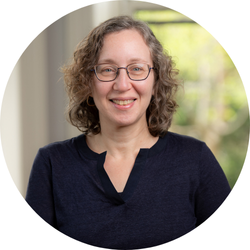 Julie Plaut spent her earliest years in Providence, Rhode Island, and returned in 2018. She is excited to be collaborating with Erica Yamamura on the chapter on place-based community engagement. As the Director of Engaged Scholarship at the Swearer Center for Public Service and an Adjunct Lecturer in Sociology at Brown University, she focuses on building capacity and community among faculty and staff in community-engaged teaching and research and creating institutional practices and local partnerships that support such work. She staffs the university's Community Engagement Council, co-chairs its Research and Public Impact Working Group, is a non-voting member of the College Curriculum Council and advises undergraduate students pursuing the Engaged Scholarship Certificate. She previously served as the Executive Director of Minnesota Campus Compact and Director of Academic Initiatives at Campus Compact. She earned a Ph.D. in History from Indiana University because any effort to address current issues is shaped by our understanding of the past. In every aspect of her work and life, she aims to contribute to purposeful, loving, liberatory learning spaces.
Melissa Quan
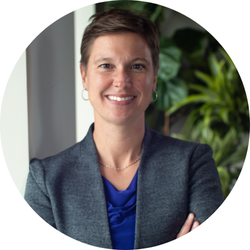 Dr. Melissa Quan is Director of the Center for Social Impact at Fairfield University, where she leads initiatives that connect the campus with community partners to address real-world challenges through teaching, research, and collaborative action. She holds a Master’s in Education from Fairfield University and a Doctorate in Higher Education from UMass Boston, where her research focused on centering community voices in understanding the impact of higher education engagement. Her scholarship explores institutional change, professional development, and community-campus relationships.
As a 2025 Campus Compact Community Engagement Professionals Research Fellow, Melissa is collaborating with Dr. Lucas Diaz to define social impact research from the perspective of Community Engagement Professionals (CEPs) and to identify the knowledge, skills, and dispositions CEPs need to advance this work within higher education.
Lem Watson
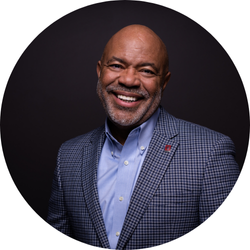 Dr. Lemuel W. Watson serves as the Interim Vice Chancellor for Academic Affairs and Provost at Antioch University and the Coalition of Common Good. A prolific author, he has written extensively on leadership, contemplative practices, underrepresented populations, spirituality, LGBTQ+ issues, public policy, and human development, securing over $13 million in research funding.
With a diverse career spanning education, non-profit organizations, and entrepreneurship, Dr. Watson is also a global consultant on leadership, public policy, and talent management. As a certified mindfulness teacher and organizational strategist, he focuses on mindful leadership to enhance work and learning environments.
Dr. Watson holds a bachelor's degree from the Moore School of Business at the University of South Carolina, a master’s degree from Ball State University, and doctorate degrees from Indiana University at Bloomington and the Emerson Theological Institute. He is dedicated to fostering silence, awareness, and self-inquiry, helping individuals align their strengths and intentions.
As a researcher and practitioner, he lives at the intersection of leadership and mindfulness. He creates spaces for silence, awareness, and self-inquiry to help individuals align their strengths and intentions to guide and lead. Through his integrative approach, he shares transformative, dedicated, and integrated tools for self-renewal, personal discovery, and capacity-building that ease clients on their journey toward peace, clarity, and freedom.
A Distinguished Professor and Dean Emeritus, Dr. Watson has held significant positions at the University of South Carolina, Northern Illinois University, and Indiana University Bloomington. He has hosted podcasts and television series and is a Fulbright Scholar to Belarus. Dr. Watson is also the CEO of Watson Consulting Services LL
Stelfanie Williams
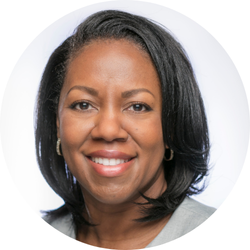 Stelfanie Williams, Vice President for Community Affairs at Duke University, will serve as a Community Engagement Professional Research Fellow. The fellowship aligns with the publication of the second edition of The Community Engagement Professional in Higher Education: A Competency Model for an Emerging Field.
In her role as a 2025 – 2026 fellow, Stelfanie will explore the role of the chief engagement officer. Joining new and returning scholars and practitioners including Greg Mellas and editor Lina Dostilio, Stelfanie will connect with leaders from across the country to outline the competencies necessary for Chief Engagement Officers, adding a new dimension to the forthcoming publication, focused on senior leadership in engagement and outreach.
Stefani Weeden-Smith
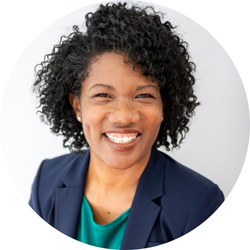 Stefani Weeden - Smith serves as the inaugural director for the St. Louis Anchor Action Network (STLAAN). The Network is committed to driving sustained investment in the people and places in our community impacted by a century of systematic racial and spatial inequities. Prior to her role with the Network, she led Washington University’s approach to partnership at the Gephardt Institute for Civic and Community Engagement as the assistant director of community engagement. She also served as program director at NCCJ St. Louis where she was instrumental in supporting local school districts and non-profits building more inclusive and equitable organizations. She earned her Master of Professional Studies at Pratt Institute in Creative Arts Therapy and Creative Development in Brooklyn, New York. A St. Louis native, she loves this city and looks for any opportunity she can to introduce people to new businesses and restaurants in her Tower Grove East neighborhood.
Erica Yamamura
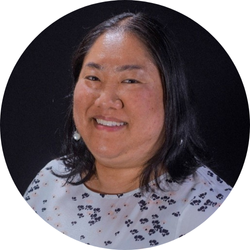 Erica K. Yamamura, PhD is interim Executive Director at LEAD California and currently serves as an impact assessment consultant for the American Council on Education. For over 15 years, she served as a professor training educational leaders in P-20 education, specifically utilizing community-engaged pedagogies to apply theory-to-practice for community benefit. Her research interests include: college access; equity, diversity, and inclusion; community partnerships; and assessment and evaluation. Dr. Yamamura is widely recognized for her work on place-based community engagement and is co-author of Place-Based Community Engagement in Higher Education: A Strategy to Transform Universities and Communities. She received her BA in Political Science and Asian American Studies, and MA and Ph.D. in Higher Education and Organizational Change from the University of California, Los Angeles.